If your child has recently been diagnosed with autism spectrum disorder (ASD) — or you’re waiting on an evaluation — one of the first questions most parents ask is simple: what therapy actually helps, and where do we start?
The good news is that autism therapy has come a long way. With the right combination of early intervention, consistent therapy, and parent involvement, most children on the spectrum make meaningful progress in communication, social skills, and daily functioning. This guide walks you through the main autism therapy options available for children in Hyderabad, how to choose the right one, and what to expect along the way.
If you’re still trying to confirm a diagnosis, it may help to first read our guides on early signs of autism in toddlers and how autism is diagnosed in children, or our broader overview of autism in children — signs, diagnosis, and treatment options.
Why Early Intervention Matters
A child’s brain is most adaptable in the first few years of life. Starting therapy as early as possible — ideally as soon as concerns are identified, even before a formal diagnosis is finalized — gives children the best chance to build skills in communication, social interaction, and self-regulation.
Delaying therapy doesn’t just delay progress; it can also mean a child misses key developmental windows for language and social learning. This is why pediatric neurologists generally recommend acting on early red flags rather than adopting a “wait and watch” approach. For a broader sense of when delays warrant a specialist visit, see signs of developmental delay in children: when to see a specialist.
Main Types of Autism Therapy
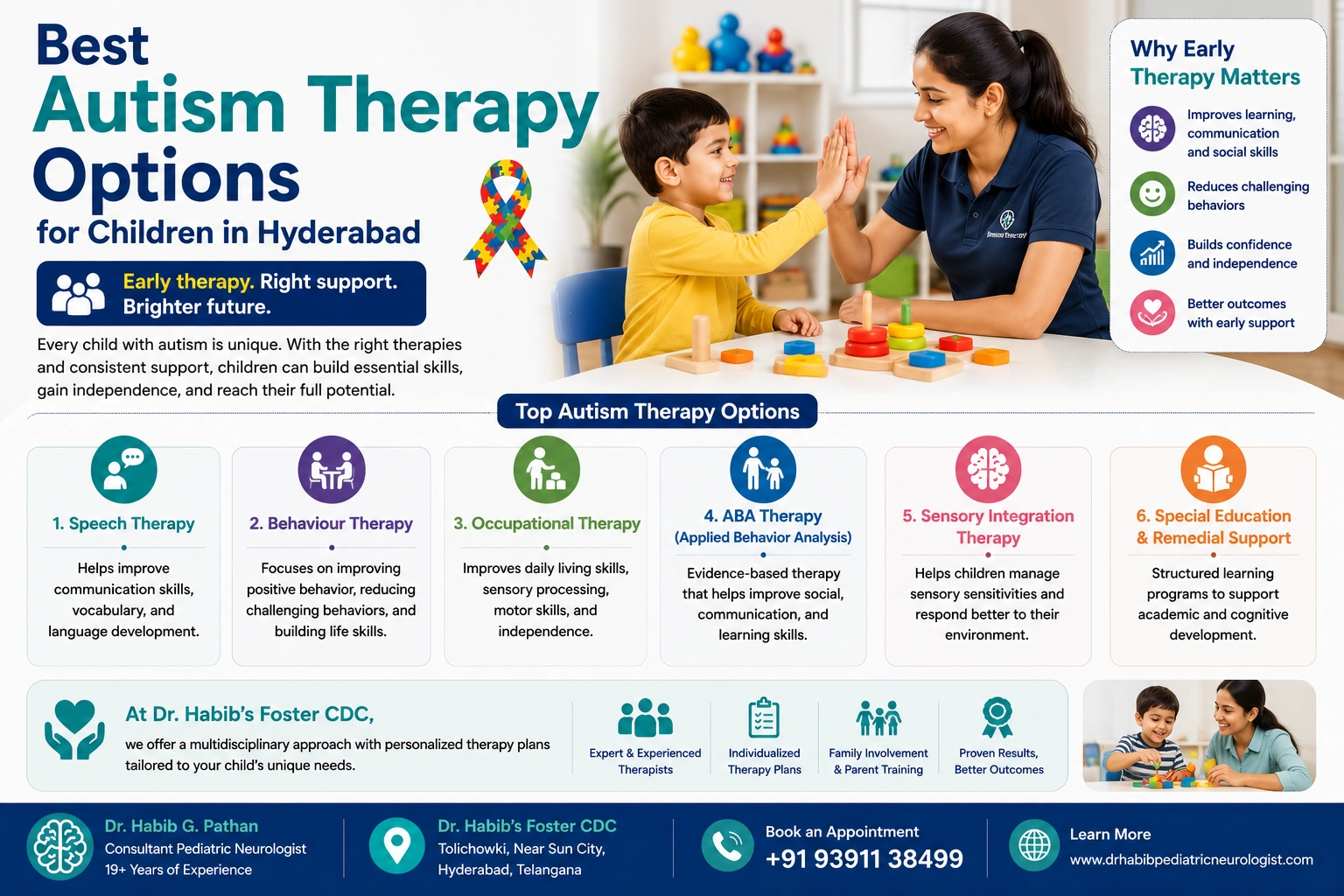
There is no single “best” therapy for every child — the right plan depends on your child’s age, strengths, challenges, and how autism shows up for them specifically. Most effective treatment plans combine more than one approach.
1. Applied Behaviour Analysis (ABA)
ABA is one of the most researched approaches for autism. It breaks down skills — communication, self-care, social interaction — into small, teachable steps, and uses positive reinforcement to build them over time. Sessions can be delivered one-on-one or in small groups, depending on the child’s needs.
2. Speech and Language Therapy
Many children on the spectrum experience delays in verbal or nonverbal communication. Speech-language therapists work on everything from first words to conversational skills, and for some children, on alternative communication methods such as picture exchange systems or communication devices.
3. Occupational Therapy (OT)
OT helps children manage sensory sensitivities, fine motor skills, and everyday tasks like dressing, eating, and handwriting. It’s especially useful for children who show sensory-seeking or sensory-avoidant behaviours. For a full breakdown of what this involves, see our complete guide to occupational therapy for children in Hyderabad.
4. Sensory Integration Therapy
Often delivered alongside OT, this approach helps children process and respond to sensory input (sound, touch, movement) in a more regulated way — reducing meltdowns and improving focus.
5. Special Education and School Readiness Support
Individualized education plans, learning accommodations, and structured teaching methods help children transition into mainstream or special schooling with the right support in place.
6. Parent-Mediated Training
Parents are with their child far more than any therapist. Parent training programs teach practical strategies — how to prompt communication, manage behaviour, and reinforce therapy goals at home — so progress isn’t limited to the therapy room.
Therapy for Toddlers vs. School-Age Children
- Toddlers (under 3 years): Therapy tends to focus on play-based learning, joint attention, early communication, and parent coaching, since young children learn best through everyday interaction rather than structured drills.
- Preschool and school-age children: As children grow, therapy often shifts toward structured skill-building, peer interaction, classroom readiness, and — where needed — academic support alongside behavioural and communication goals.
Milestones can be a useful reference point when discussing progress with your therapy team. Our child development milestones by age guide is a good starting point.
What to Expect During the Evaluation Process
Before starting therapy, most centers begin with a structured assessment to understand your child’s current strengths and needs. This typically includes:
- A detailed developmental and behavioural history from parents
- Direct observation of the child’s communication, play, and social interaction
- Standardized screening or diagnostic tools
- A discussion of therapy goals and a recommended plan
If you’d like a fuller picture of what this looks like in practice, read what happens during a child developmental assessment.
In-Clinic vs. Online Therapy
Both formats have a place, depending on the child and family circumstances:
- In-clinic therapy allows hands-on techniques, sensory equipment, and direct therapist supervision — often preferred for younger children or those with higher support needs.
- Online/tele-therapy can work well for parent coaching sessions, follow-ups, or families with mobility or scheduling constraints, though it’s usually best used to supplement rather than fully replace in-person therapy, especially early on.
What Parents Can Do at Home
Therapy outcomes improve significantly when skills are reinforced consistently outside the clinic. Some simple, everyday habits that support progress include:
- Using simple, consistent language during daily routines
- Building in predictable schedules to reduce anxiety
- Encouraging play that involves turn-taking and shared attention
- Praising and reinforcing small communication attempts
For more structured ideas, see our article on 10 everyday activities to support your child’s development at home.
Choosing the Right Autism Therapy Center in Hyderabad
When evaluating a center, consider:
- Clinical oversight: Is the program supervised by a qualified pediatric neurologist, developmental pediatrician, or clinical psychologist?
- Individualized planning: Is therapy tailored to your child, or is it a one-size-fits-all program?
- Multidisciplinary care: Can the center coordinate speech, occupational, and behavioural therapy under one roof, or will you need to manage multiple providers separately?
- Parent involvement: Does the program actively train and involve parents, not just the child?
- Progress tracking: Are goals reviewed and adjusted regularly based on measurable progress?
Costs and session frequency vary widely depending on the type and intensity of therapy your child needs, so it’s best discussed directly with the clinical team during your evaluation rather than estimated in advance.
When to Start — and Why Not to Wait
If you’ve noticed signs like limited eye contact, delayed speech, repetitive behaviours, or difficulty with social interaction, it’s worth getting a professional opinion sooner rather than later. An early evaluation doesn’t commit you to anything — but it does open the door to early intervention, which is consistently linked to better long-term outcomes.
Frequently Asked Questions
What is autism therapy, and how does it help children? Autism therapy refers to a range of evidence-based interventions — including behavioural, speech, occupational, and sensory therapies — aimed at helping children build communication, social, and daily-living skills suited to their individual needs.
At what age should autism therapy start? Therapy can begin as early as signs are identified, often in toddlerhood, since early intervention during key developmental windows tends to produce the strongest outcomes.
Who should a parent consult first if they suspect autism? A pediatric neurologist or developmental specialist experienced in autism evaluation is typically the right first point of contact, as they can confirm a diagnosis and guide you toward an appropriate therapy plan.
If you’d like a professional evaluation for your child, book an appointment with Dr. Habib’s Foster CDC at our Tolichowki, Malakpet, or Suncity clinics in Hyderabad.

Recent Comments