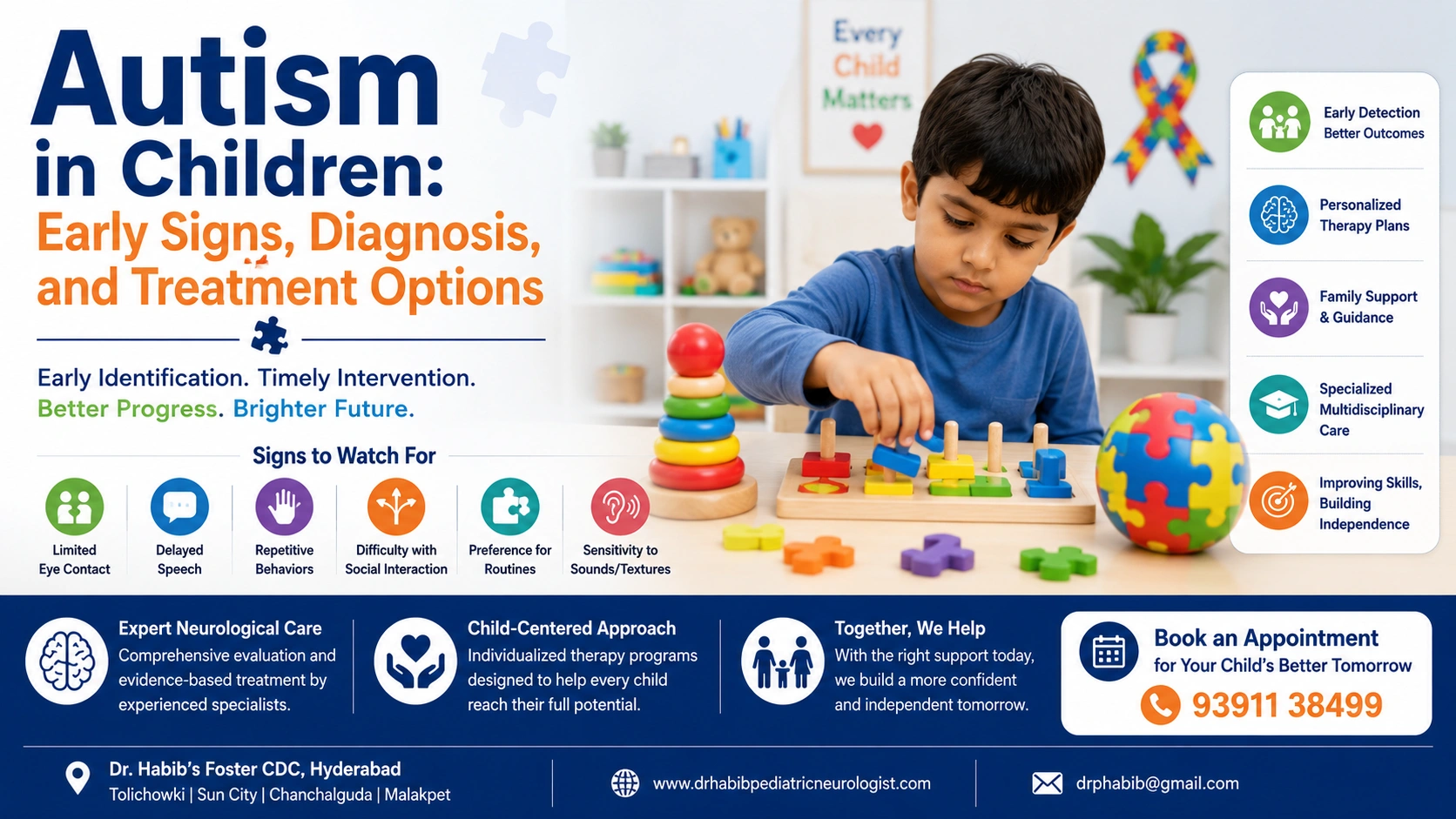
Every child develops at their own pace, but some children may experience differences in communication, social interaction, and behavior that become noticeable during early childhood. These differences may be associated with Autism Spectrum Disorder (ASD), a neurodevelopmental condition that affects how children interact with the world around them.
Recognizing the early signs of autism and seeking timely medical evaluation can make a significant difference in a child’s development. With appropriate therapies and family support, many children with autism can improve their communication, learning, and daily living skills.
What is Autism Spectrum Disorder (ASD)?
Autism Spectrum Disorder (ASD) is a developmental condition that affects brain development. It primarily influences:
- Social communication
- Language development
- Behavior
- Learning
- Sensory processing
The word “spectrum” means that autism affects every child differently. Some children require significant support, while others can perform daily activities independently with the right guidance.
Early Signs of Autism in Children
Parents should watch for signs such as:
Social Signs
- Limited eye contact
- Doesn’t respond to their name
- Prefers to play alone
- Difficulty interacting with other children
- Limited facial expressions
Communication Signs
- Delayed speech
- Doesn’t point to objects
- Repeats words or phrases (echolalia)
- Difficulty understanding simple instructions
Behavioral Signs
- Repetitive movements like hand flapping or rocking
- Strong attachment to routines
- Upset by small changes
- Intense interest in specific objects or topics
Sensory Signs
- Sensitivity to loud sounds
- Discomfort with certain textures
- Avoids physical touch
- Fascination with lights or moving objects
What Causes Autism?
The exact cause of autism is not fully understood, but research suggests it results from a combination of genetic and environmental factors that affect early brain development.
Autism is not caused by poor parenting or vaccines.
Risk Factors
Some factors that may increase the likelihood include:
- Family history of autism
- Premature birth
- Certain genetic conditions
- Advanced parental age
- Low birth weight
How is Autism Diagnosed?
Diagnosis involves a comprehensive developmental assessment that may include:
- Detailed medical history
- Developmental screening
- Behavioral observation
- Parent interviews
- Standardized autism assessment tools
- Hearing and vision evaluation
- Neurological examination
Early diagnosis allows children to begin therapy during the years when brain development is most adaptable.
Treatment Options
Although there is no cure for autism, early intervention and individualized therapy can greatly improve outcomes.
Speech Therapy
Improves communication and language skills.
Occupational Therapy
Develops fine motor skills, sensory processing, and independence in daily activities.
Behavioral Therapy
Helps improve social interaction, emotional regulation, and adaptive behaviors.
Special Education
Supports learning through individualized teaching methods.
Parent Training
Provides practical strategies to reinforce therapy goals at home.
Medication may be recommended in selected cases to manage associated symptoms such as anxiety, sleep disturbances, or hyperactivity, when advised by a specialist.
Tips for Parents
- Encourage interactive play.
- Maintain a predictable daily routine.
- Celebrate small achievements.
- Limit excessive screen time.
- Work closely with therapists and teachers.
- Attend regular follow-up appointments.
When Should You See a Pediatric Neurologist?
Consult a pediatric neurologist if your child:
- Has delayed speech or language
- Avoids eye contact
- Does not respond to their name
- Shows repetitive behaviors
- Has developmental delays
- Experiences seizures along with developmental concerns
- Displays persistent difficulties with communication or social interaction
Why Choose Dr. Habib G. Pathan?
Dr. Habib G. Pathan is an experienced Pediatric Neurologist in Hyderabad who provides comprehensive evaluation and management for children with autism and other neurodevelopmental conditions. At Dr. Habib’s Foster CDC, children receive multidisciplinary care tailored to their individual developmental needs.
Frequently Asked Questions
1. At what age can autism be identified?
Some signs may be noticeable between 12 and 24 months, though diagnosis may occur later depending on the child.
2. Is autism curable?
Autism is a lifelong neurodevelopmental condition, but early intervention can significantly improve communication, learning, and independence.
3. Can children with autism attend regular schools?
Many children can attend mainstream schools with appropriate educational support, while others may benefit from specialized programs.
4. Does delayed speech always mean autism?
No. Speech delay can have many causes, which is why a comprehensive medical evaluation is important.
5. Which therapies help children with autism?
Speech therapy, occupational therapy, behavioral therapy, special education, and parent training are commonly recommended.
6. When should parents seek medical advice?
If developmental or behavioral concerns persist or your child misses key milestones, schedule an evaluation with a pediatric neurologist.
Conclusion
Autism Spectrum Disorder presents differently in every child, but early recognition and timely intervention can have a lasting positive impact. Understanding the signs, obtaining an accurate diagnosis, and following a personalized treatment plan can help children develop essential communication, social, and life skills.
If you have concerns about your child’s development, seek guidance from an experienced pediatric neurologist for a comprehensive assessment and individualized care plan.

Recent Comments