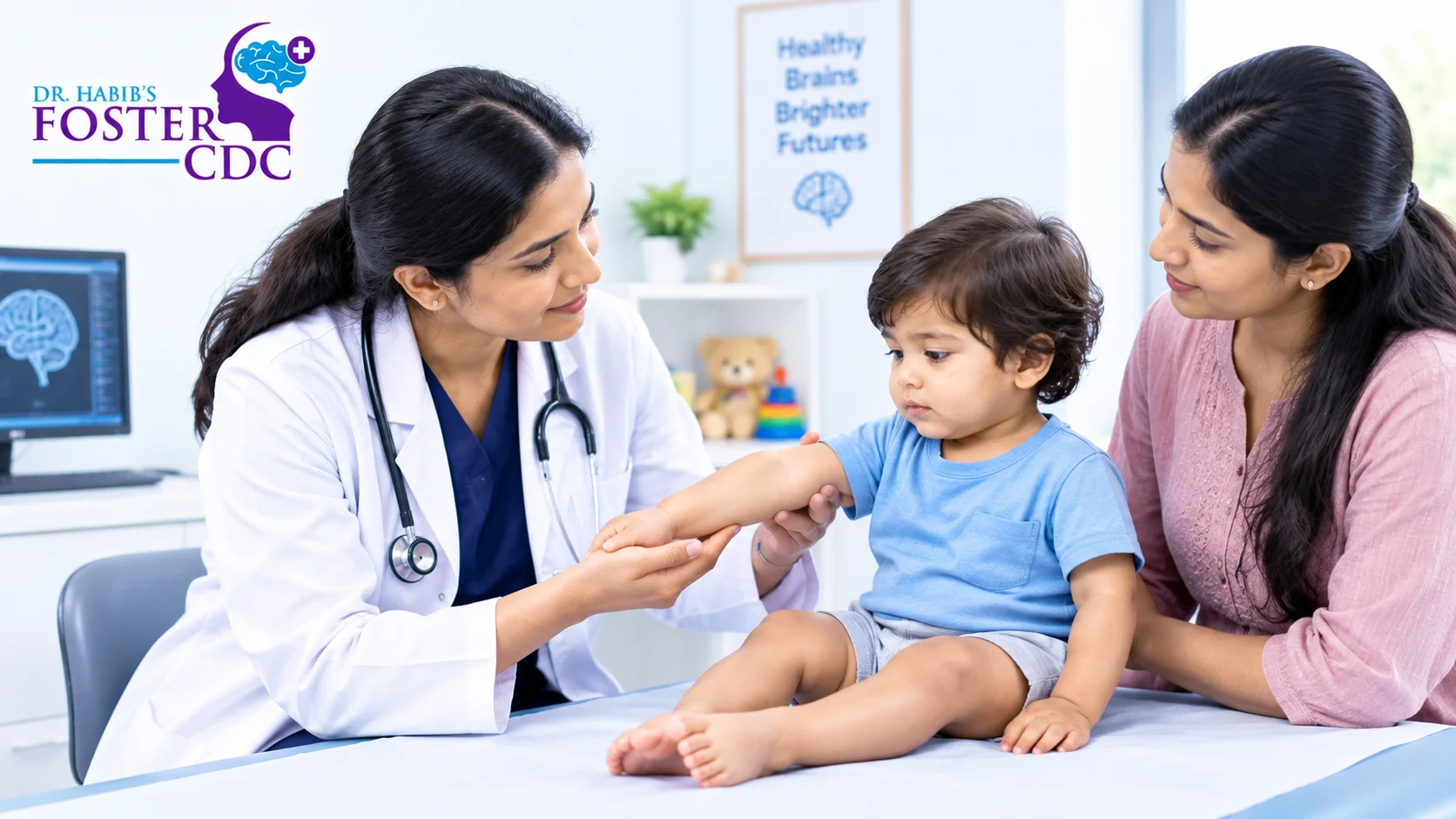
If you’re reading this, something about your child’s development may have started to worry you. Maybe your baby feels “floppy” when you pick them up. Maybe your toddler isn’t walking or talking yet, and the reassurance of “every child is different” has stopped feeling like enough. Or maybe your child had been learning new things and then, quietly, stopped, or began to lose skills they already had.
Before anything else, three things we want every parent to hear:
- Most developmental delays are not caused by a genetic disorder. Noticing a delay does not mean something rare or serious has been found.
- A genetic cause is never anyone’s fault. It is not caused by something you ate, did, or didn’t do during pregnancy or after.
- Asking questions early is one of the kindest things you can do for your child. Answers, even difficult ones, open doors to the right support.
This guide explains what neurogenetic disorders are, which early clues deserve attention, how genetic testing works, and why an early diagnosis can change what comes next.
See a doctor promptly if your child: loses skills they had already learned (words, walking, hand use, eye contact); has seizures; has severe floppiness, feeding or breathing difficulty; or seems to be steadily getting worse. These signs need a specialist’s attention without waiting.
What Are Neurogenetic Disorders? Defining the Gene-Brain Link
Genes are the instructions that tell the body how to grow and work, and the brain depends on thousands of them to build its wiring, make its chemical messengers, and keep its cells healthy. A neurogenetic disorder is a condition in which a change in one or more genes, or in a piece of a chromosome, affects how the nervous system develops or functions.
These changes can take several forms:
- A change in a single gene (for example, conditions such as Rett syndrome or spinal muscular atrophy)
- Missing or extra pieces of chromosomes (as in Down syndrome or certain deletion syndromes)
- Changes in the genes of mitochondria, the cell’s energy factories
- Inherited metabolic conditions, where the body can’t break down certain substances, which then affect the brain
A few points that surprise many families:
- “Genetic” does not always mean “inherited.” Many changes arise for the first time in the child (called de novo) and are not present in either parent.
- The range is wide. Some neurogenetic conditions are mild; others are more serious. Some are treatable, and even when there is no cure, much can be done to support development and comfort.
- They can show up at any age, from the newborn period to later childhood or even adolescence.
If your child has seizures, our guide to epilepsy in children explains how seizures and genetics are sometimes linked.
Early Developmental Clues: Hypotonia, Motor Delays, and Milestones
No single sign proves a genetic cause. What doctors look for is a pattern, especially several clues together. Common early clues include:
- Delayed milestones: sitting, crawling, walking, or speaking noticeably later than expected, or delays in several areas at once
- Hypotonia (low muscle tone): a baby who feels floppy, slips through your hands, has poor head control, or struggles to feed
- Feeding difficulties: weak suck, poor weight gain, or frequent choking in infancy
- Seizures that begin early or are hard to control
- Head size differences: a head that is unusually small (microcephaly) or large
- Distinctive physical features (doctors call these dysmorphic features), or differences in the face, hands, feet, or skin
- Vision or hearing problems present from early life
- Unusual movements, tremors, or stiffness
- A family history of similar developmental problems, or of parents who are related by blood
Whether your child’s skills are on track is best judged against typical ranges. The table below shows general guideposts; please treat it as a starting point rather than a diagnosis, and see our full child development milestones guide for more detail.
| Age (approx.) | What many children are doing | Worth discussing with a doctor if… |
|---|---|---|
| 2 to 4 months | Social smile, follows faces, begins to hold head up | Rarely smiles or makes eye contact; very floppy; poor head control |
| 6 months | Rolls over, reaches for toys, babbles | Not reaching or babbling; stiff or floppy limbs; not responding to sounds |
| 9 to 12 months | Sits alone, pulls to stand, waves, says first sounds or words | Not sitting; no babbling or gestures; loses previous skills |
| 18 months | Walks, uses several words, points to show interest | Not walking; very few or no words; not pointing or responding to name |
| 2 years | Runs, combines two words, plays pretend | No two-word phrases; marked clumsiness; loss of words or skills |
| 3 years | Speaks in short sentences, climbs, plays with other children | Speech hard to understand; poor interaction; falling behind in several areas |
When a delay affects speech, our article on speech and language delay in children explains the many possible causes, and for a broader view see developmental delay in children and when to see a specialist. Floppiness (low tone) and stiffness (high tone) are opposites; if your child is stiff rather than floppy, our guide to dystonia and spasticity covers that side.
Understanding Developmental Regression
Of all the early clues, regression is the one doctors take most seriously, and it’s the one that frightens parents most.
Regression means a child loses skills they had already gained: words they used to say, steps they used to take, hand skills, eye contact, or social interest. It is different from a plateau (progress slowing or pausing) and different from a short-lived dip during illness or a big life change.
Because regression can have several causes, a doctor will look broadly. Possibilities include:
- Certain neurogenetic and metabolic conditions (this is why regression often prompts genetic and metabolic testing)
- Epilepsy syndromes, where frequent seizure activity or abnormal brain waves interfere with learning
- Autism spectrum disorder, in which some children lose language or social skills in the second year (see our guide to early signs of autism in toddlers)
- Hearing loss, infections, or other medical problems that can be treated
The key message: don’t wait and watch if your child is losing skills. Note which skills disappeared and roughly when. Short videos from earlier in your child’s life, such as birthdays and family gatherings, can be remarkably useful for the doctor.
How Genetic Testing (Exome, CMA) Unlocks Answers
For many families, the idea of genetic testing feels big and frightening. In practice, it usually starts with a simple blood or saliva sample, after a conversation about what the tests can and cannot tell you.
Which test is chosen depends on your child’s story. Common ones include:
- Chromosomal microarray (CMA): looks for missing or extra pieces of chromosomes, which are too small to see under a microscope. It is often an early test for children with developmental delay, intellectual disability, autism, or multiple physical differences.
- Exome sequencing: reads the part of the DNA that holds the instructions for making proteins, where most disease-causing changes are found. It can identify single-gene conditions and is particularly useful when the picture is complex or the cause is unclear.
- Targeted gene panels or single-gene tests: used when the pattern strongly suggests a specific condition, such as Fragile X or a known epilepsy gene group.
- Genome sequencing and other advanced tests may be considered in selected cases.
Testing is usually paired with other investigations, such as a careful neurological examination, brain MRI, EEG if seizures are suspected, and, in some situations, blood or urine tests for metabolic conditions. A thorough clinical assessment, as described in our guide to what happens during a child developmental assessment, is what tells the team which tests are worth doing.
Things worth knowing before testing:
- A result can be clear, unclear, or normal. Sometimes a change is found that is clearly the cause. Sometimes a “variant of uncertain significance” (VUS) is found, meaning science doesn’t yet know whether it matters.
- A normal result doesn’t rule out a genetic cause. Today’s tests can’t find every change, and knowledge grows each year, so samples are sometimes reanalyzed later.
- Parents’ samples may be needed to interpret a child’s result.
- Genetic counseling is part of good care. A counselor or specialist explains what a result means for your child, what it may mean for other family members, and what choices it opens for the future, both before and after testing.
- Cost, timing, and availability vary, so discuss them openly with your care team.
A short glossary of genetic terms
| Term | Plain-language meaning |
|---|---|
| Gene | A unit of instructions in DNA that tells the body how to build or run something |
| Variant | A change in a gene’s instructions; some are harmless, some cause disease |
| De novo | A change that appears for the first time in the child and wasn’t inherited from either parent |
| CMA (chromosomal microarray) | A test that finds missing or extra pieces of chromosomes |
| Exome sequencing | A test that reads the protein-coding part of a person’s DNA |
| VUS | “Variant of uncertain significance”: a change whose effect isn’t yet known |
| Hypotonia | Low muscle tone; a “floppy” feel |
| Regression | Loss of skills a child had already gained |
| Microcephaly | A head size smaller than expected for age |
| Dysmorphic features | Physical differences in the face, hands, or body that can be clues to a genetic condition |
| Genetic counseling | Guidance from a trained professional to understand genetic results and their meaning for the family |
The Value of Early Diagnosis in Guiding Therapy
Waiting for answers can feel endless, and many families describe a long “diagnostic odyssey” of appointments before anyone names what’s happening. So it’s worth being clear about why an early diagnosis matters, even when it can’t change the underlying condition.
1. Some conditions are treatable, and timing matters. For certain metabolic and genetic conditions, specific treatments, diets, medicines, or newer targeted therapies exist, and they often work best when started early.
2. It guides the right seizure treatment. In some genetic epilepsies, certain medicines help and others can make seizures worse. Knowing the cause helps the team choose wisely.
3. It points to what to look out for. Many genetic conditions are linked to heart, hearing, vision, bone, or feeding problems. Knowing which one allows doctors to monitor and prevent complications.
4. It focuses therapy. Physical therapy, speech therapy, and occupational therapy can be tailored to your child’s pattern of strengths and challenges. For a detailed look at what to expect from OT, see our guide to occupational therapy for children in Hyderabad.
5. It brings clarity to the family. A name for the condition can end the guilt and uncertainty, help with school and support planning, connect you with other families, and give honest information about the chance of it happening again in the family.
6. It supports early intervention. The first years are a period of rapid brain growth, so consistent therapy and stimulation can make a real difference to progress, even when the diagnosis is not curable.
Care is almost always multidisciplinary: a pediatric neurologist working alongside therapists, a dietitian, genetics specialists, and other doctors, with the family at the center. And if no diagnosis is found, therapy and support don’t have to wait; your child’s needs, not a label, guide the plan.
Frequently Asked Questions
Q: What are the early signs of a neurogenetic disorder in children? A: Early signs often include developmental delay or regression (loss of learned skills), dysmorphic physical features, severe hypotonia (floppiness), persistent seizures, or microcephaly.
Q: Is a neurogenetic disorder always inherited from parents? A: No. Some are inherited, but many arise as new changes in the child (de novo) and are not found in either parent. A genetic specialist can explain the likelihood for your family.
Q: What is the difference between a developmental delay and developmental regression? A: Delay means a child is gaining skills more slowly than expected. Regression means a child is losing skills they had already learned, and it always deserves prompt medical evaluation.
Q: What genetic tests are used for children with developmental delay? A: Common tests include chromosomal microarray (CMA), exome sequencing, and targeted gene tests, chosen according to the child’s symptoms. Testing is usually done with a blood or saliva sample.
Q: If genetic testing is normal, does that mean there is no genetic cause? A: Not necessarily. Current tests cannot find every change, and knowledge keeps improving, so results may be reviewed again later. Therapy and support should continue regardless.
You Are Not Alone on This Road
Searching for answers about your child’s development can be lonely, and it’s natural to feel scared, tired, or even guilty. None of those feelings means you’re doing anything wrong. They mean you care. The best thing you can do now is gather information, keep notes and videos, and bring your questions to someone who can examine your child and help you plan the next step.
Consult Dr. Habib Pathan at Dr. Habib’s Foster CDC in Hyderabad for an expert pediatric neurogenetic assessment and developmental therapies tailored to your child.
This article is for educational purposes and does not replace a medical consultation. If your child has sudden, severe, or worsening symptoms, seek urgent medical care.

Recent Comments