
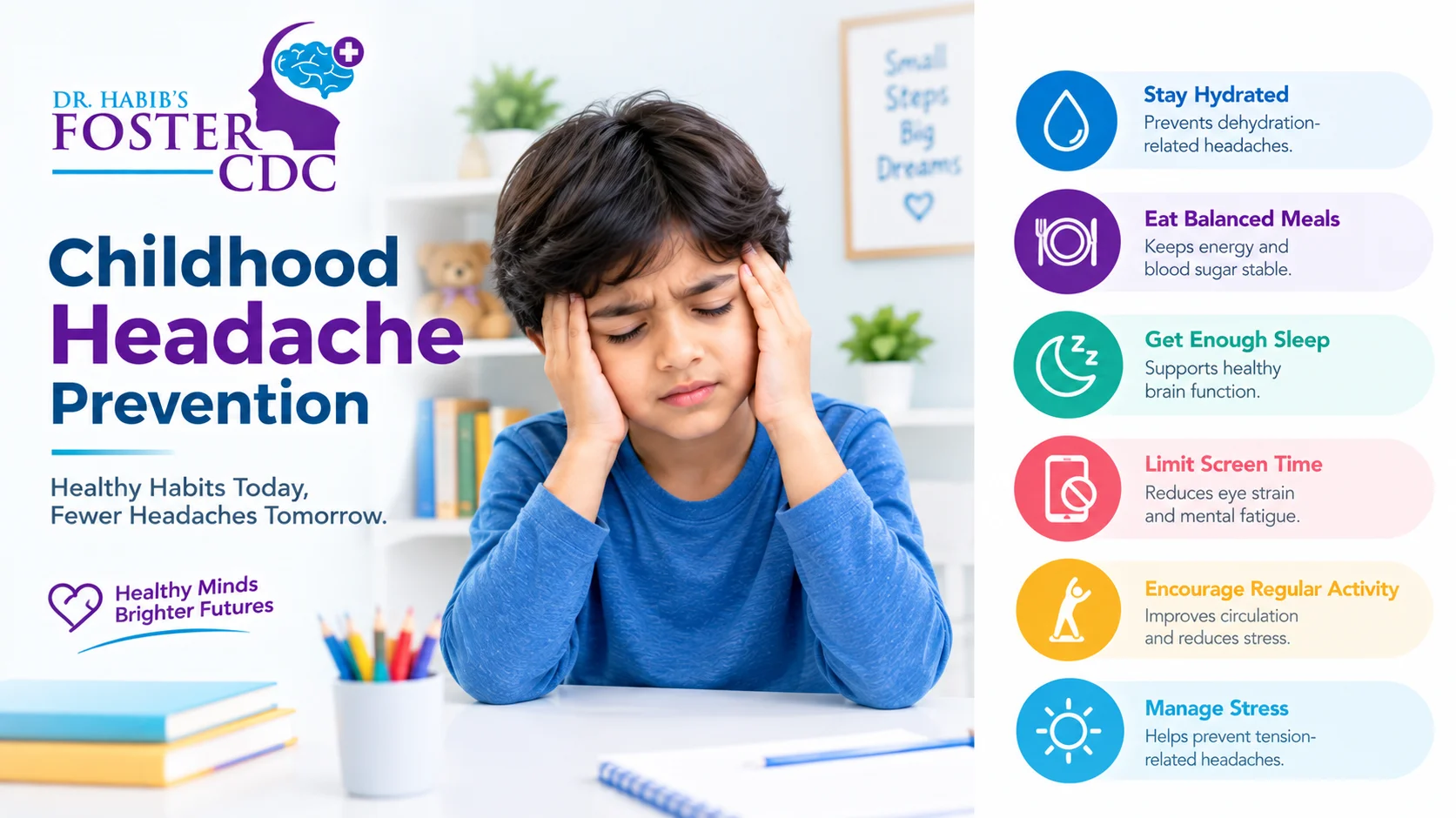
It’s 4 p.m. on a school day, and the message arrives again: “Mummy, my head is hurting.” Maybe it’s the third time this week. You’ve given water, a rest, perhaps a pain tablet, and tomorrow you’ll probably do it all over again.
If this is your family’s rhythm, you’re not alone, and you’re not doing anything wrong. Recurring headaches are one of the most common reasons parents seek advice about their children, and for most of those children, the headaches are not caused by anything dangerous. They’re a signal from a body that’s tired, thirsty, stressed, hungry, or overloaded.
The encouraging part? That kind of headache often responds best not to more medicine, but to the small, steady habits of daily life. This guide walks through them.
First, a quick safety check. Lifestyle changes are for ordinary, recurring headaches. If your child’s headache is sudden and severe, follows a head injury, comes with fever and stiff neck, or is paired with vomiting, vision changes, weakness, balance problems, or confusion, seek medical care promptly. Our guide to childhood headache red flags explains exactly what to watch for.
The Pediatric Headache Pyramid: Sleep, Hydration, Nutrition
Think of headache prevention as a pyramid. The base has to be solid before anything else works. The three foundation stones are sleep, fluids, and food.
1. Sleep: the biggest lever
Irregular sleep is among the most reliable headache triggers in children. It’s not only how long your child sleeps but how regularly. A child who sleeps late and wakes late on weekends, then struggles on Monday, is giving their brain a mini jet lag every week.
- Keep bedtime and wake time within about an hour of each other across the week
- Switch off screens well before bed; the stimulation and bright light delay sleep
- Keep the bedroom cool, dark, and quiet
- Avoid caffeine (cola, tea, energy drinks, chocolate drinks) in the afternoon and evening
If your child snores heavily, gasps at night, or wakes unrefreshed, mention it to a doctor, since disrupted breathing during sleep can cause morning headaches.
2. Hydration: small sips, all day
In Hyderabad’s heat, it’s easy for children to go a whole school day on a few sips. Even mild dehydration can bring on a headache.
- Send a named water bottle to school and encourage refilling it
- Offer water with meals and after play or sports, rather than waiting for thirst
- Many school-age children do well with roughly 1.5 to 2 litres of total fluids a day, though the right amount varies with age, body size, activity, and weather, so younger children need less and active children in hot weather may need more
- Pale-yellow urine is a handy sign that fluid intake is about right
- Limit sugary drinks and caffeine, which can do more harm than good
Drinking enormous amounts at once is not the goal. Steady and regular is better.
3. Nutrition: don’t skip breakfast
A long gap without food drops blood sugar, and for many children that brings on a headache. A few habits make a real difference:
- Never skip breakfast. Something simple, like idli, an egg, paratha with curd, or fruit and milk, is far better than nothing
- Pack a healthy mid-morning snack and make sure lunch is actually eaten
- Include fruits, vegetables, whole grains, and protein across the day
- Notice, without being rigid about it, whether certain foods seem to come before headaches; a diary helps (see below)
Some families wonder about supplements such as magnesium or riboflavin. Evidence for children is mixed, so please talk to a doctor before giving any supplement, especially at higher doses.
Layer on: movement and routine
Regular physical activity, such as outdoor play, cycling, swimming, or sports, helps both sleep and stress. Children with a predictable daily rhythm tend to have fewer headaches than those whose days change constantly. For ideas on building structure and healthy activity into the day, see our everyday activities that support your child’s development at home.
A sample school-day rhythm
| Time | Habit |
|---|---|
| On waking | Glass of water, then breakfast |
| School morning | Water bottle refilled at break; healthy snack |
| Lunch | Full meal, plus water |
| After school | Snack, outdoor play or exercise (not straight to a screen) |
| Evening | Homework in a well-lit space with breaks; dinner at a regular hour |
| Before bed | Screens off, wind-down routine, same bedtime nightly |
Daily water and sleep checklist
Track one week and bring it to your appointment if headaches continue:
| Day | Bottles of water | Breakfast eaten? | Bedtime | Wake time | Headache? (Y/N) |
|---|---|---|---|---|---|
| Mon | |||||
| Tue | |||||
| Wed | |||||
| Thu | |||||
| Fri | |||||
| Sat | |||||
| Sun |
Screen Fatigue and Postural Strain in the Digital Age
Online classes, homework portals, games, and videos have given children far more screen time than earlier generations had. Long hours can strain the eyes, tire the neck and shoulders, and push bedtime later. All three feed headaches.
Give the eyes a break. Try the 20-20-20 rule: every 20 minutes, look at something about 20 feet (6 metres) away for 20 seconds.
Fix the setup:
- Screen at or just below eye level, about an arm’s length away
- Feet supported, back supported, shoulders relaxed
- Good, even lighting; avoid glare from windows or a dark room with a bright screen
- Take a movement break at least once an hour
- Keep screens out of the bedroom at night
Check the eyes. A child who squints, sits very close to the screen, or rubs their eyes may need an eye test. Uncorrected vision problems are a common and easily fixed cause of headaches.
Posture and the school bag. A heavy bag carried on one shoulder, or hunched writing, can strain the neck. If your child struggles with posture, handwriting stamina, or sitting comfortably, an occupational therapist can help; see our guide to occupational therapy for children in Hyderabad.
Managing School Academic Stress and Anxiety-Linked Pain
Here’s something that surprises many parents: a headache caused by stress is real pain. It isn’t “put on” or an excuse. When children feel anxious or overwhelmed, muscles tighten in the neck, jaw, and scalp, and the brain becomes more sensitive to pain signals.
Common sources of stress include exams and competition, homework overload, friendship troubles or bullying, big changes (a new school, a move, family difficulties), and the pressure to perform in many activities at once.
Clues that stress may be involved: headaches that appear on school mornings or before tests and fade on holidays, a child who also complains of tummy aches, trouble sleeping, irritability, or reluctance to go to school.
What helps:
- Listen first. Ask open questions (“What was the hardest part of today?”) and avoid dismissing worries
- Protect free time. Children need play and rest as much as study
- Teach a calming skill. Here’s one to try together, once a day and whenever a headache starts: Slow-breathing exercise (about 2 minutes): Sit comfortably. Breathe in slowly through the nose while you count to four. Hold gently for two. Breathe out slowly through the mouth for a count of six. Repeat for ten breaths, dropping the shoulders on each out-breath. Younger children can pretend to blow out a candle or smell a flower.
- Try progressive relaxation: tense and release muscle groups one by one, from toes to face
- Use a warm or cool compress on the forehead or neck, and rest in a quiet, dim room
- Consider counseling or therapy if worry is persistent; approaches such as cognitive behavioral therapy and relaxation training have good evidence for children with recurrent headaches
If worries about concentration or attention are also part of the picture, our overview of ADHD in children may help you understand what a specialist looks for.
The Hidden Danger of Medication-Overuse Headaches
This is the part almost nobody tells parents, so please read it carefully.
Pain medicines, even common ones, can help in the moment. But when they’re taken too often, the brain can become sensitized, and headaches may become more frequent, creating a cycle: headache, tablet, relief, rebound headache, another tablet. This is called a medication-overuse headache.
What to know:
- Pain relievers should be used occasionally, not as a daily routine
- As a general guide, if your child needs pain relief more than two or three days a week, for several weeks in a row, it’s time to see a doctor rather than continuing to treat at home
- Always follow the dose on the label or your doctor’s instructions for your child’s age and weight
- Do not give aspirin to children or teenagers
- Avoid combination tablets or strong painkillers unless a doctor has prescribed them
- Keep a record of every dose given, including the date and reason
If your child is stuck in this cycle, a doctor can guide a safe plan to break it. Please don’t stop or change medicines abruptly without advice.
When to Consult a Pediatric Neurologist
Lifestyle changes often make a clear difference within a few weeks, but they’re not a substitute for proper evaluation when it’s needed. Book an appointment if:
- Headaches are frequent (for example, several a week) or getting worse despite good habits
- They interfere with school, sleep, play, or mood
- Your child needs pain relief regularly
- Headaches wake your child at night or are worst on waking
- There’s a family history of migraine, and the headaches come with nausea or sensitivity to light and sound
- Anything on the red-flag list worries you
A specialist can work out whether the headaches are tension-type, migraine, or something else, and design a plan that fits your child. If you want to know what a thorough assessment feels like, read about what happens during a child developmental assessment.
Frequently Asked Questions
Q: How can parents prevent recurrent tension headaches in school children? A: Maintain consistent sleep schedules, ensure steady daily fluid intake (roughly 1.5 to 2 liters for many school-age children, adjusted for age and weather), limit continuous screen time, provide balanced meals without skipping breakfast, and introduce simple relaxation breathing techniques.
Q: What are natural remedies for child headaches? A: The most effective natural approaches are not herbs but habits: regular sleep, enough water, regular meals, screen breaks, physical activity, and relaxation or breathing exercises. A cool compress and rest in a quiet room can ease a headache in the moment.
Q: Can too much screen time cause headaches in children? A: It can contribute. Long screen sessions strain the eyes, tire the neck and shoulders, and delay sleep, all of which are known headache triggers. Regular breaks, good posture, and screen-free time before bed help.
Q: How often is it safe to give a child pain medicine for headaches? A: Occasional use at the correct dose is generally fine, but frequent use can lead to medication-overuse headaches. If your child needs pain relief more than two or three days a week for several weeks, see a doctor.
Q: Can stress or anxiety really cause headaches in children? A: Yes. Stress tightens muscles and increases pain sensitivity, producing real headaches. Relaxation skills, protected downtime, and, when needed, counseling can reduce them.
Small Habits, Big Relief
You don’t need to overhaul your child’s life overnight. Pick one or two changes this week, perhaps a consistent bedtime and a water bottle at school, and build from there. Notice what helps. Keep the diary. Most children see their headaches ease when the basics are steady, and when they don’t, that tells you it’s time to look deeper.
Get personalized guidance from Dr. Habib’s Foster CDC pediatric team in Tolichowki, Malakpet, or Suncity, Hyderabad.
This article is for educational purposes and does not replace a medical consultation. If your child has sudden, severe, or worsening symptoms, seek urgent medical care.

Recent Comments