
Soon after an autism diagnosis, most parents hear the term “behaviour therapy” — often before anyone explains what it actually involves. It’s one of the most widely used and researched approaches for children on the autism spectrum, but it’s also one of the most misunderstood.
This guide breaks down what behaviour therapy is, how it works, what it can realistically help with, and what to look for in a good program in Hyderabad.
If you’re still confirming a diagnosis or want the bigger picture first, start with our guides on early signs of autism in toddlers, how autism is diagnosed in children, and our overview of autism in children — signs, diagnosis, and treatment options. If you’re specifically comparing therapy types, our guide to autism therapy options in Hyderabad covers the full picture.
What Is Behaviour Therapy?
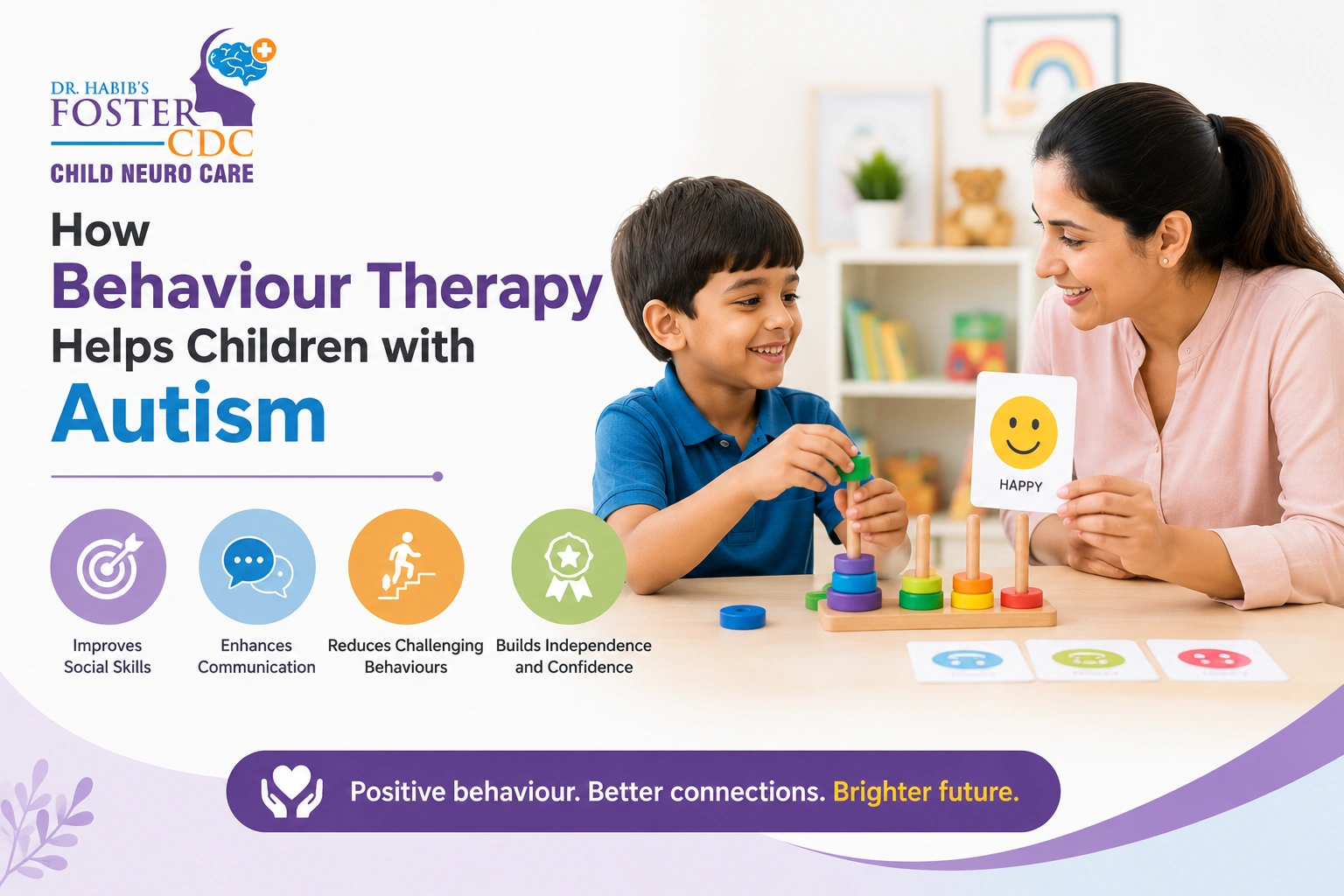
Behaviour therapy is a structured, evidence-based approach that helps children build new skills — communication, social interaction, self-care, play — while reducing behaviours that interfere with learning or daily life, such as tantrums, self-injury, or repetitive routines that limit engagement.
The most well-known form is Applied Behaviour Analysis (ABA), but “behaviour therapy” is really a family of related approaches, all grounded in the same core idea: behaviour is learned, and it can be reshaped through consistent, positive reinforcement.
How Behaviour Therapy Actually Works
Rather than trying to change a child all at once, behaviour therapy breaks bigger goals into small, teachable steps. A typical process looks like this:
- Assessment — the therapist observes the child and identifies specific skills to build and behaviours to address.
- Goal-setting — clear, measurable goals are set (for example, initiating eye contact, requesting an item with a word or gesture, tolerating a change in routine).
- Teaching in small steps — skills are broken into manageable pieces and taught through repetition, prompting, and reinforcement.
- Reinforcement — desired behaviours are immediately followed by something motivating for the child (praise, a preferred toy, a favourite activity).
- Data tracking — progress is recorded session to session, so the plan can be adjusted based on what’s actually working.
This structure is part of why behaviour therapy tends to produce measurable, trackable progress rather than vague improvement.
What Behaviour Therapy Can Help With
- Communication: building first words, requesting needs, using gestures or communication devices
- Social skills: turn-taking, shared attention, responding to their name, understanding social cues
- Daily living skills: dressing, eating, toileting, following routines
- Reducing challenging behaviours: tantrums, aggression, self-injury, or rigid resistance to change
- School readiness: sitting for structured tasks, following instructions, tolerating group settings
It’s worth noting that behaviour therapy is rarely used in isolation. It’s usually paired with occupational therapy and speech-language therapy as part of a coordinated plan.
At What Age Should Behaviour Therapy Start?
There’s no fixed age cutoff, but earlier intervention is consistently associated with stronger outcomes. Many children begin behaviour therapy as toddlers, as soon as autism-related concerns are identified — often even before a full diagnostic evaluation is complete, since early skill-building doesn’t need to wait for a formal label.
For school-age children, behaviour therapy still helps, though goals typically shift toward classroom behaviour, peer interaction, and independence skills.
What a Session Actually Looks Like
Sessions can be delivered one-on-one or in small groups, and typically happen in-clinic, at home, or in a school setting — sometimes a mix of all three. A session usually involves structured teaching activities interspersed with play, since engagement and motivation are central to how well a child responds.
Parents are often invited to observe or participate directly, since therapy goals only stick when they’re reinforced consistently outside the clinic too.
In-Clinic vs. Online Behaviour Therapy
- In-clinic sessions allow closer supervision, structured environments, and access to therapy materials and equipment — generally preferred for younger children or those with more intensive needs.
- Online sessions work well for parent coaching, consultation, and follow-up, but are usually better as a supplement to in-person therapy rather than a full replacement, particularly in the early stages.
What Parents Can Do at Home
Behaviour therapy works best when it doesn’t stay confined to the therapy room. Simple things parents can do between sessions include:
- Using the same simple, consistent language the therapist uses
- Reinforcing small wins immediately with praise or a preferred activity
- Keeping daily routines predictable to reduce anxiety-driven behaviours
- Practising specific skills (like requesting or turn-taking) during everyday moments, not just structured drills
For more structured ideas, see 10 everyday activities to support your child’s development at home.
What to Expect During the Evaluation
Before therapy begins, most centers conduct a structured evaluation to understand the child’s current skills, challenges, and priorities. This generally includes a detailed developmental history, direct observation, and standardized assessment tools, followed by a discussion of recommended goals and therapy intensity. Our article on what happens during a child developmental assessment walks through this process in detail.
Choosing a Behaviour Therapy Program in Hyderabad
When evaluating a program, look for:
- Qualified oversight by a pediatric neurologist, developmental pediatrician, or trained behaviour analyst
- Individualized goals, not a generic, one-size-fits-all curriculum
- Data-driven progress tracking, with goals reviewed and adjusted regularly
- Parent training and involvement, not therapy delivered in isolation from the family
- Coordination with other therapies — speech, occupational, and educational support, where relevant
Session frequency and cost vary depending on the intensity of therapy your child needs, so these are best discussed directly with the clinical team during your evaluation.
Frequently Asked Questions
What is behaviour therapy for autism, and how does it help children? It’s a structured, evidence-based approach that teaches communication, social, and daily-living skills in small steps, using positive reinforcement, while also reducing behaviours that interfere with a child’s learning and daily life.
Is behaviour therapy the same as ABA? ABA (Applied Behaviour Analysis) is the most well-known and widely researched form of behaviour therapy, but “behaviour therapy” more broadly includes related approaches built on the same reinforcement-based principles.
Who should a parent consult about starting behaviour therapy? A pediatric neurologist or developmental specialist experienced in autism is the right first point of contact — they can confirm the diagnosis, assess the child’s specific needs, and recommend an appropriately intensive therapy plan.
Next step: To find out whether behaviour therapy is right for your child, book an appointment with Dr. Habib’s Foster CDC at our Tolichowki, Malakpet, or Suncity clinics in Hyderabad.
This article is for general information and does not replace a professional medical evaluation. Reviewed by Dr. Habib G. Pathan, Consultant Pediatric Neurologist.

Recent Comments