
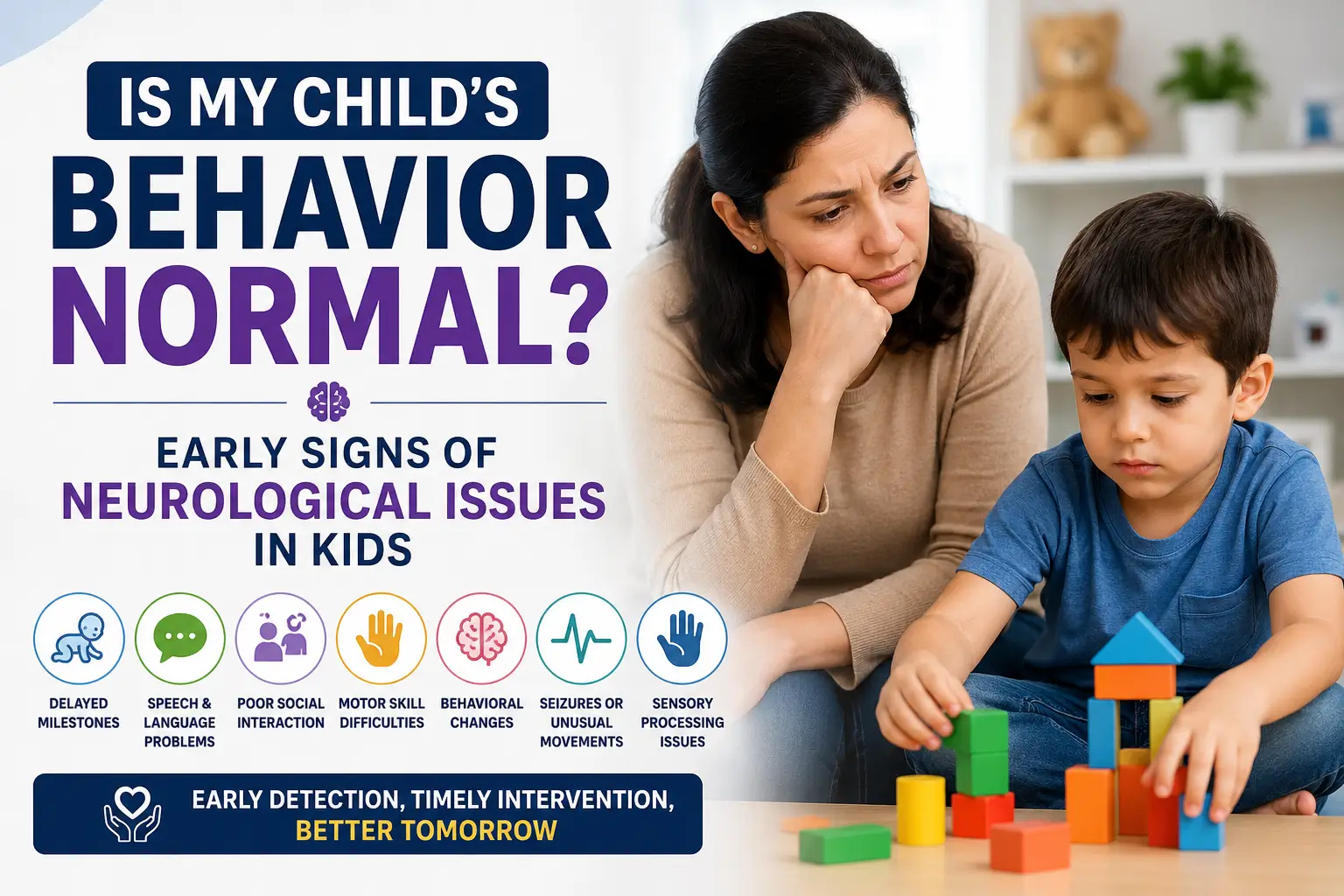
Introduction
Parenting comes with a near-constant stream of questions — and one of the most common is: “Is what my child is doing normal?”
The truth is, children don’t develop on a single fixed timeline. Every child is shaped by their genetics, environment, temperament, and experiences. That said, there’s a meaningful difference between individual variation and patterns that deserve closer attention. Knowing that difference can be the key to getting your child the support they need, early enough to matter.
This guide walks you through what typical childhood behavior looks like, which signs may point to neurological concerns, and how to take the right next steps.
What Falls Within the Range of Normal?
Before jumping to conclusions, it helps to understand just how wide “normal” can be for children at different stages.
Behaviors that are typically age-appropriate:
- Meltdowns and emotional outbursts between ages 2 and 4
- A short attention span in very young children
- Wariness or clinginess around strangers
- Slower speech development compared to peers
- Bursts of high energy or difficulty sitting still
The key distinction is consistency and intensity. A toddler who occasionally refuses to share is normal. A school-age child who has never interacted with peers and shows no interest in doing so is a different situation entirely.
Signs That May Indicate a Neurological Concern
When certain behaviors persist, worsen over time, or seem significantly out of step with a child’s age, they can be early indicators of an underlying neurological issue. The earlier these are caught, the more effective intervention tends to be.
- Missing Developmental Milestones
Children hit physical and cognitive milestones in a rough sequence. When a child consistently lags behind these markers, it warrants investigation.
Examples to watch for:
- Not sitting independently by 9 months
- Not taking first steps by 18 months
- No recognizable words by age 2
- Struggling to follow simple, two-step instructions
- Delayed or Disordered Speech and Language
Speech development is one of the most visible windows into a child’s neurological health. It’s not just about how many words a child knows — it’s also about how they use language to connect.
Concerning signs include:
- A noticeably limited vocabulary for their age
- Difficulty putting words together into phrases or sentences
- Not responding when called by name
- Avoiding eye contact while communicating
- Limited Social Engagement
Children are naturally wired for connection. When a child shows little interest in other people — including family members — or seems unable to read social situations, this can signal something beyond introversion.
Signs to pay attention to:
- Consistent avoidance of eye contact
- Preferring to play alone and resisting peer interaction
- Flat or limited emotional expression
- Difficulty understanding unspoken social rules
- Motor Development and Coordination Challenges
Fine and gross motor skills are closely tied to neurological function. Clumsiness is common in young children, but certain patterns cross into red-flag territory.
Watch for:
- Falling more frequently than expected for their age
- Persistent trouble with balance
- Difficulty gripping a spoon, crayon, or other objects
- Tremors, stiffness, or unusual tension in the hands or limbs
- Extreme Hyperactivity or Behavioral Issues
Energetic children are the norm — but there’s a spectrum. When a child’s behavior is significantly beyond what their peers display, or when it starts to interfere with their daily functioning, it deserves a closer look.
Possible warning signs:
- Hyperactivity that is extreme even for young children
- A complete inability to focus on any task for even brief periods
- Aggressive, repetitive, or compulsive behaviors
- Sudden regression — losing abilities they previously had
- Seizures or Involuntary Movements
Seizures are among the most urgent neurological symptoms a child can show. They don’t always look like what you’d imagine from TV depictions.
Symptoms that require prompt medical attention:
- Sudden, uncontrolled jerking of limbs
- Blank staring spells that last several seconds
- Brief episodes of unconsciousness or unresponsiveness
- Sudden muscle rigidity
If you witness these symptoms, seek medical care immediately.
- Unusual Sensitivity to Sensory Input
Some children have nervous systems that process sensory information differently than expected. This can show up as both oversensitivity and undersensitivity to stimuli.
Signs to note:
- Extreme reactions to loud sounds, bright lights, or physical touch
- Strong refusal of certain textures in food or clothing
- Compulsively seeking intense sensory experiences (spinning, crashing into things, etc.)
When Is It Time to Consult a Specialist?
It’s not about one odd day or a temporary rough patch. Consider reaching out to a specialist when:
- A behavior or pattern has been consistently present for 3 to 6 months or more
- Your child has lost skills they previously demonstrated (this is called developmental regression)
- You’re noticing concerns across multiple areas at once — speech, motor skills, and behavior together, for instance
- The behavior is noticeably impacting your child’s ability to participate in daily life
Your instincts as a parent matter. If something feels persistently off, it’s worth pursuing — even if you can’t articulate exactly why.
Conditions That May Be Behind These Signs
A diagnosis should only come from a qualified medical professional, but the symptoms above may be associated with:
- Autism Spectrum Disorder (ASD)
- Attention Deficit Hyperactivity Disorder (ADHD)
- Cerebral Palsy
- Epilepsy
- Specific Learning Disabilities
Each of these conditions exists on a spectrum, and many children with these diagnoses lead full, rich lives — especially with early, targeted support.
Why Early Action Makes Such a Difference
The brain is at its most adaptable during the early years of life. Intervention during this window can reshape developmental trajectories in meaningful ways.
Potential benefits of early support:
- Stronger language and communication outcomes
- Improved physical coordination and motor skills
- Greater capacity for social interaction and emotional regulation
- Reduced likelihood of complications further down the line
Depending on the diagnosis, therapies may include speech-language therapy, occupational therapy, applied behavioral analysis, physical therapy, or a combination tailored to the child’s needs.
What Parents Can Do Right Now
- Document what you observe. Patterns matter more than single incidents. Keep simple notes with dates.
- Focus on your own child. Comparing to siblings or neighbors rarely helps — every child’s baseline is different.
- Schedule a developmental screening. Your pediatrician can administer standardized assessments and make referrals.
- Don’t wait for certainty. You don’t need to have all the answers before seeking an evaluation. That’s what specialists are for.
Closing Thoughts
Wondering whether your child’s behavior is typical is one of the most human parts of parenting. Most of the time, what concerns parents turns out to be within the range of normal variation. But when something persistent catches your attention, taking it seriously is the right call.
Early recognition, timely assessment, and appropriate intervention can fundamentally alter the path ahead — for your child and for your whole family.
Frequently Asked Questions
What are the earliest neurological signs to watch for in children?
Persistent developmental delays, absent or limited speech, minimal social engagement, and atypical movements are among the earliest indicators.
At what point should a parent’s concern turn into action?
When behaviors are ongoing, worsening, or meaningfully interfering with your child’s daily life, it’s time to consult a professional.
Does a speech delay automatically mean a neurological problem?
Not necessarily. Speech delays have multiple causes. However, they can sometimes reflect neurological or developmental factors, so assessment is worthwhile.
Can these conditions be treated?
Many neurological and developmental conditions in children respond well to early, targeted therapy — especially when identified before school age.
How do I know if my child has a developmental delay?
If your child isn’t reaching age-expected milestones, a formal developmental assessment through your pediatrician is the most reliable next step.
Which type of doctor should I see?
A pediatric neurologist or developmental pediatrician specializes in exactly these concerns and is well-equipped to evaluate and guide you.

Recent Comments