Introduction
Frequent headaches in children are becoming increasingly common due to modern lifestyle habits, increased screen exposure, stress, irregular sleep patterns, and dietary issues. While many headaches are temporary and harmless, some recurring headaches may indicate an underlying neurological concern that requires medical attention.
Parents often struggle to understand whether their child’s headache is caused by dehydration, migraine, stress, or something more serious. Knowing the warning signs can help ensure timely diagnosis and treatment.
This detailed guide explains the causes, symptoms, neurological warning signs, treatment options, prevention tips, and when to consult a pediatric neurologist for frequent headaches in children.
What Are Frequent Headaches in Children?
A child experiencing headaches multiple times a week may be suffering from recurrent headaches. These headaches can affect concentration, sleep quality, school performance, and emotional health.
Frequent headaches may appear as:
- Mild recurring pain
- Severe migraine attacks
- Pressure-like tension headaches
- Chronic daily headaches
Persistent headaches should always be monitored carefully, especially if symptoms worsen over time.
Common Causes of Frequent Headaches in Children
Dehydration
One of the most common causes of headaches in children is dehydration. Children often forget to drink enough water during school or physical activities.
Symptoms of dehydration headaches:
- Dry mouth
- Fatigue
- Dizziness
- Weakness
- Irritability
Lack of Sleep
Poor sleep habits can trigger frequent headaches in school-age children.
Children who:
- Sleep late regularly
- Use mobile phones before bedtime
- Have interrupted sleep
- Do not get enough rest
are more likely to develop recurring headaches.
Excessive Screen Time
Long hours on smartphones, tablets, laptops, and television can strain the eyes and trigger headaches.
Screen-related headaches are especially common in children attending online classes or spending excessive time gaming.
Stress and Anxiety
Emotional stress can cause tension headaches in children.
Common stress triggers include:
- Academic pressure
- Bullying
- Family problems
- Social anxiety
- Competitive activities
Stress headaches usually feel like pressure around the forehead or scalp.
Migraine in Children
Migraine headaches in children may appear differently than adult migraines.
Common migraine symptoms in children:
- Throbbing head pain
- Nausea
- Vomiting
- Sensitivity to light
- Sensitivity to sound
- Dizziness
- Stomach pain
Some children may also experience visual disturbances before a migraine attack.
Types of Headaches Seen in Children
Tension Headaches
These headaches cause mild to moderate pressure around the head and are often linked to stress or fatigue.
Migraine Headaches
Migraines are severe headaches often associated with nausea and sensitivity to light or sound.
Sinus Headaches
Sinus infections can cause facial pain and headaches along with nasal congestion.
Cluster Headaches
Cluster headaches are rare in children but may cause severe pain around one eye.
Chronic Daily Headaches
Headaches occurring more than 15 days a month are considered chronic daily headaches.
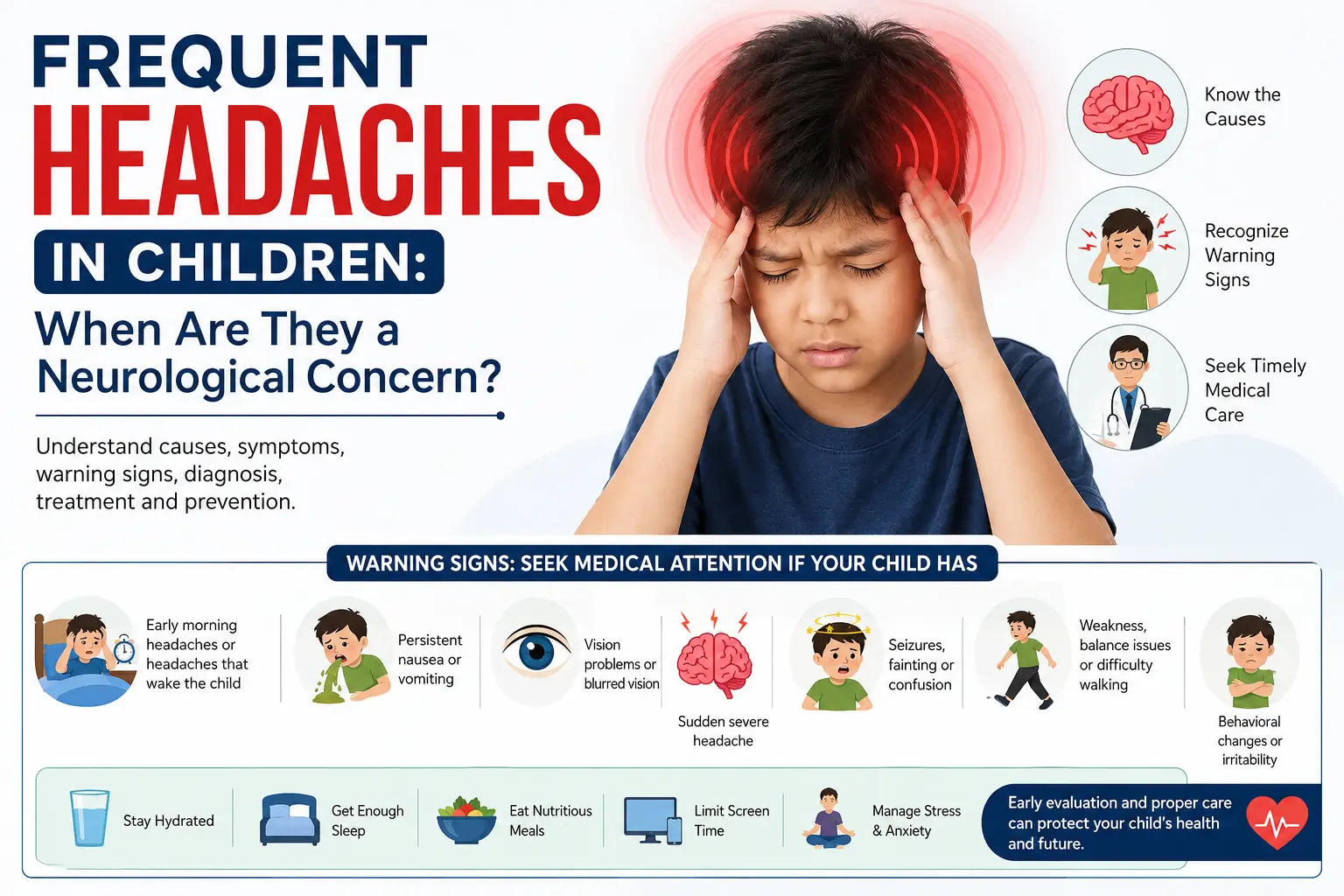
When Are Frequent Headaches in Children a Neurological Concern?
Although many headaches are harmless, certain symptoms may indicate neurological problems.
Parents should seek medical evaluation if headaches are associated with alarming symptoms.
Warning Signs That Need Neurological Evaluation
Early Morning Headaches
Headaches that:
- Wake the child from sleep
- Occur immediately after waking up
- Improve after vomiting
may indicate increased pressure inside the brain.
Persistent Vomiting
Frequent vomiting along with headaches may signal neurological involvement.
Sudden Severe Headache
A sudden intense headache should never be ignored and may require emergency medical care.
Vision Problems
Seek medical attention if headaches occur with:
- Blurred vision
- Double vision
- Eye movement issues
- Vision loss
Seizures or Loss of Consciousness
Headaches associated with seizures or fainting require immediate neurological assessment.
Weakness or Difficulty Walking
Symptoms such as:
- Weakness in arms or legs
- Balance issues
- Difficulty walking
- Poor coordination
can indicate neurological disorders.
Behavioral Changes
Recurring headaches with:
- Irritability
- Memory problems
- Personality changes
- Difficulty concentrating
should be evaluated by a specialist.
Neurological Causes of Frequent Headaches in Children
Brain Infections
Conditions like meningitis or encephalitis may cause:
- Severe headache
- Fever
- Neck stiffness
- Drowsiness
These are medical emergencies.
Brain Tumors
Brain tumors are rare but can sometimes present with persistent headaches and neurological symptoms.
Hydrocephalus
Hydrocephalus occurs when excess fluid builds up inside the brain, increasing pressure and causing headaches.
Epilepsy-Related Headaches
Some children may experience headaches before or after seizures.
How Frequent Headaches in Children Are Diagnosed
Medical History and Physical Examination
Doctors first evaluate:
- Frequency of headaches
- Duration
- Triggers
- Family history
- Associated symptoms
Neurological Examination
A neurological exam checks:
- Reflexes
- Vision
- Muscle strength
- Coordination
- Balance
Eye Examination
Eye tests help identify increased brain pressure affecting the optic nerves.
MRI or CT Scan
Brain imaging may be recommended if neurological symptoms are present.
Blood Tests
Blood tests help rule out infections, anemia, or nutritional deficiencies.
Treatment for Frequent Headaches in Children
Lifestyle Modifications
Healthy habits can significantly reduce headache frequency.
Important lifestyle changes include:
- Drinking enough water
- Maintaining proper sleep
- Limiting screen time
- Eating balanced meals
- Managing stress
Medications
Doctors may prescribe:
- Pain relievers
- Migraine medications
- Preventive therapies
Medication should only be given under medical supervision.
Behavioral Therapy
Stress-related headaches often improve with:
- Counseling
- Relaxation techniques
- Cognitive behavioral therapy
Tips to Prevent Frequent Headaches in Children
Encourage Proper Hydration
Children should drink water regularly throughout the day.
Maintain Healthy Sleep Habits
A fixed sleep schedule supports healthy brain function.
Reduce Screen Exposure
Taking breaks during screen use helps reduce eye strain and headaches.
Provide Nutritious Meals
Skipping meals can trigger headaches in many children.
Support Emotional Well-Being
Helping children manage stress can reduce tension headaches.
When Should You Consult a Pediatric Neurologist?
Parents should consult a pediatric neurologist if:
- Headaches become frequent
- Symptoms worsen gradually
- Daily activities are affected
- Neurological symptoms appear
- Standard treatments stop working
Early medical evaluation can help identify serious conditions before complications develop.
Frequently Asked Questions
Are frequent headaches common in children?
Yes, headaches are relatively common in children, but frequent or severe headaches should be medically evaluated.
Can dehydration trigger headaches in kids?
Yes, dehydration is one of the leading causes of headaches in children.
What are migraine symptoms in children?
Migraine symptoms may include throbbing pain, nausea, dizziness, vomiting, and sensitivity to light or sound.
When should parents worry about headaches in children?
Parents should seek medical attention if headaches occur with vomiting, seizures, weakness, balance problems, or vision changes.
Can screen time cause headaches in children?
Yes, excessive screen exposure can trigger headaches due to eye strain and poor posture.
Conclusion
Frequent headaches in children can result from dehydration, stress, sleep deprivation, migraines, or excessive screen use. However, headaches accompanied by neurological warning signs should never be ignored.
Recognizing symptoms early and seeking timely medical care can help prevent serious complications. Maintaining healthy lifestyle habits and consulting a pediatric neurologist when necessary can significantly improve a child’s overall health and quality of life.

Recent Comments