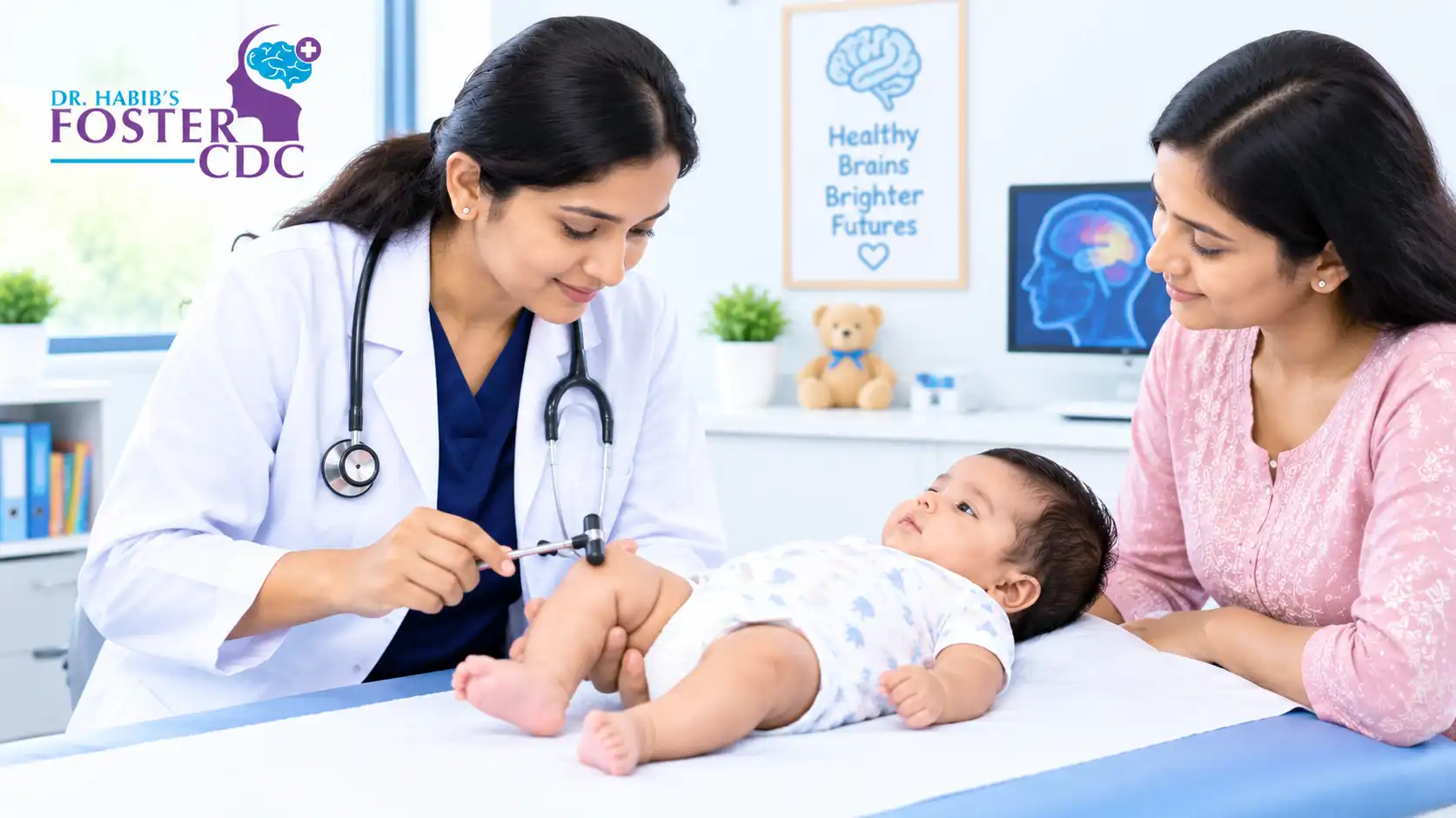
Not long ago, a diagnosis of spinal muscular atrophy (SMA) in a baby came with very little hope. Today, that story has changed. There are now treatments that can stop SMA from getting worse and, when started early, can let many children sit, stand, and even walk. Families and doctors are living through one of the biggest advances in modern pediatric neurology.
But there’s a catch, and it’s the reason this article exists: these treatments work best when they start early. So recognizing the first signs, and knowing what to ask for, can change a child’s future. This guide is for parents who are worried about a floppy or weak baby, and for clinicians and families looking for a clear, up-to-date overview.
Understanding SMA and the SMN1 Gene
Spinal muscular atrophy is a genetic condition that affects the motor neurons, the nerve cells in the spinal cord that send the signals telling muscles to move. When these cells are lost, the muscles they control become weak and thin (this is what “atrophy” means). SMA is estimated to affect roughly 1 in 10,000 babies and is one of the leading genetic causes of death in infancy when untreated.
The gene behind it. Most children with SMA have changes in both copies of a gene called SMN1, which makes a protein called SMN (survival motor neuron) that motor neurons need to survive. Without enough SMN protein, motor neurons gradually die.
The backup gene. Humans also carry a “backup” gene, SMN2, which makes a small amount of working SMN protein. The number of SMN2 copies a child has helps explain why SMA can be severe in one child and milder in another: more copies usually means more protein and, generally, a milder form.
How it’s inherited. SMA is autosomal recessive. Both parents are usually healthy carriers with no symptoms, and each pregnancy has a 1 in 4 chance of an affected child. It is nobody’s fault, and carriers can’t tell without testing. Our guides to pediatric neurogenetic disorders and genetic testing for children with developmental delay explain how inheritance and testing work.
What SMA does not affect. Children with SMA are typically bright, alert, and sociable. SMA affects muscle strength and movement, not intelligence, and not the ability to feel touch.
Recognizing SMA Types 1, 2, and 3 in Young Children
SMA is described in “types” based on when symptoms start and the best motor milestone reached without treatment. These categories remain useful for understanding the condition, though modern treatment is changing how they play out.
| Type 1 | Type 2 | Type 3 | |
|---|---|---|---|
| Usual onset | Birth to about 6 months | About 6 to 18 months | After 18 months, through childhood or adolescence |
| Untreated motor course | Cannot sit without support; severe weakness | Sits, but doesn’t walk independently | Walks, but may become weaker and lose walking later |
| Typical SMN2 copies | Most often 2 | Most often 3 | Often 3 or 4 |
| Breathing and feeding | Weak breathing and swallowing early on | Breathing muscles weaken over time; scoliosis common | Milder; fatigue and difficulty with stairs |
| Key early clue | Floppiness, weak cry, poor feeding | Late sitting, finger tremor, unable to stand | Frequent falls, trouble climbing stairs, waddling walk |
A few babies have an even more severe, prenatal-onset form (sometimes called type 0), and adults can have a milder type 4.
Early physical warning signs of SMA type 1
Because type 1 is the most urgent form, it helps to know its pattern. Seen together, these signs strongly suggest SMA and call for urgent specialist evaluation:
- Severe, symmetric weakness, usually worse in the legs and in the muscles closest to the body (hips and shoulders). The baby may lie in a “frog-leg” position and barely kick against gravity
- A “bell-shaped” chest. The belly rises while the chest wall sinks in during breathing, because the small muscles between the ribs are weak and the diaphragm does most of the work
- Tongue fasciculations, a fine, worm-like quivering of the tongue when it’s at rest
- Absent or very reduced reflexes (a doctor will check)
- Marked head lag and poor head control
- A weak cry and weak cough
- Trouble feeding, with weak sucking, tiring, choking, or poor weight gain
- A baby who is wide awake, interested, and makes good eye contact. The face is usually expressive, which can reassure parents and delay worry, but good alertness doesn’t rule out SMA
Signs that point to type 2 or 3: a child who sits late or can’t hold a sitting position, fine shaking of the fingers, difficulty standing or walking, frequent falls, trouble getting up from the floor, or a waddling walk.
If your baby feels floppy and you’re unsure why, our guide to infant hypotonia, the “floppy baby” explains how doctors tell nerve and muscle causes from brain causes. For age-expected skills, see our child development milestones guide, and for concerns about delay, read when to see a specialist for developmental delay.
How SMA is diagnosed
The key test is a simple blood test that checks the SMN1 gene (and counts the SMN2 copies). Results can be available quickly in many centers, and it is usually the first genetic test sent when a baby has the signs above. Doctors may also check CPK levels and other tests to rule out look-alikes. A baby with the classic signs should not wait for a long series of tests before treatment is discussed, because time matters.
Revolutionary Breakthroughs: Gene Therapy and SMN Up-regulators
SMA treatment has been transformed by three disease-modifying therapies, each aiming to raise the amount of SMN protein in the body. They don’t repair motor neurons that are already lost, but they can stop further loss and let remaining nerves and muscles work better.
| Treatment | How it works | How it’s given |
|---|---|---|
| Nusinersen (Spinraza) | An antisense medicine that helps the SMN2 gene produce more full-length SMN protein | Injection into the fluid around the spinal cord (intrathecal), a few loading doses and then regular maintenance doses; a higher-dose regimen was recently approved in some countries |
| Onasemnogene abeparvovec (Zolgensma; an intrathecal form, Itvisma, is now approved for older patients in some countries) | Gene replacement: a harmless virus delivers a working copy of the SMN1 gene into cells | A one-time treatment: intravenous for young children, or intrathecal in the newer form for older children and adults where approved |
| Risdiplam (Evrysdi) | A small-molecule medicine that helps SMN2 make more working SMN protein, throughout the body | Taken by mouth daily, as a liquid (and in some countries as a tablet) |
What families should know about each:
- Nusinersen has the longest track record. It requires repeated procedures and sometimes sedation, and can be harder for children with spinal curvature or fusion
- Gene therapy is a single treatment, but it needs careful screening and monitoring, especially of the liver, and it has weight and age limits. It also involves very high costs
- Risdiplam is convenient because it’s oral, but it must be taken every day, without gaps. Side effects, including effects on the skin, stomach, and fertility in older patients, are monitored by the care team
- Combinations and switching are being studied, and some families change therapy for reasons of convenience, side effects, or access. This is a decision to make with your specialist
The most important message: earlier is better. In studies, babies treated before symptoms begin (presymptomatically) often reach milestones such as sitting and walking, far beyond what was possible without treatment. Children treated after symptoms start still tend to benefit, but the nerve cells already lost don’t come back. That is why speed matters, and why a delayed referral can cost a child function they might otherwise keep.
Treatments are not a “cure,” and responses vary. Choosing among them depends on the child’s age, how severe symptoms are, the SMN2 copy number, safety checks, the route of administration, cost and availability, and family preference. New medicines, including treatments aimed at the muscle itself, are being tested in clinical trials.
SMA treatment timeline
| Year | Milestone |
|---|---|
| 2016 | Nusinersen becomes the first approved SMA treatment (US FDA, December) |
| 2019 | Intravenous gene therapy (onasemnogene abeparvovec) approved in the US (May) |
| 2020 | Risdiplam, the first oral SMA treatment, approved in the US |
| 2025 | Intrathecal gene therapy (Itvisma) approved in the US for patients aged 2 and older (November); Indian court ruling (March) clears the way for lower-cost generic risdiplam |
| 2026 | A higher-dose nusinersen regimen approved in the US (March); nusinersen and risdiplam made permanently available on the NHS in England (May) |
Access and cost in India
For families in Hyderabad and across India, the practical questions are as important as the science:
- Availability varies. Some therapies are not routinely available in India and may need special import or access arrangements. Oral risdiplam is available, and lower-cost Indian generic versions have recently appeared, which has made treatment more reachable for many families. Prices, brands, and approvals change often, so ask your treating team for current options.
- Government support exists. India’s National Policy for Rare Diseases has offered one-time financial assistance, through designated Centres of Excellence, for eligible patients. Patient groups note that it may not cover lifelong treatment, so check current eligibility, limits, and the application process with your hospital
- Don’t wait for funding to begin the work-up. Confirming the diagnosis, starting supportive care, and discussing options with a specialist can all begin right away
- Be careful with online fundraising claims and unverified “cures.” Ask your specialist to confirm any treatment you’re considering
Supportive Therapies: Pulmonary Care, Nutrition, and Physical Therapy
Medicines are only part of SMA care. Supportive (or “standards of care”) treatment protects breathing, nutrition, bones, and mobility, and it matters for every child, whether or not they are on a disease-modifying therapy.
Breathing and lung care
- Regular assessment of breathing, including sleep-related breathing problems
- Airway clearance techniques and devices (such as cough assist) to clear secretions
- Non-invasive breathing support when needed
- A fast plan for chest infections, since they can escalate quickly, plus recommended vaccinations
Feeding, swallowing, and nutrition
- Swallowing assessments and feeding techniques
- A feeding tube when needed to ensure safe, adequate nutrition
- Monitoring of growth, reflux, constipation, and bone health
Movement, bones, and posture
- Physical therapy to maintain range of motion, prevent contractures, and use the strength a child has
- Standing frames, braces, positioning, and early access to supportive seating and mobility aids, including powered wheelchairs when appropriate. Independent movement helps development and confidence
- Monitoring and, if needed, treatment of scoliosis and hip problems
- Occupational therapy for hand function, daily living, and play; see our guide to occupational therapy for children in Hyderabad
Whole-child support
- Speech and communication support
- School planning, accessible environments, and inclusion
- Emotional support for the child, siblings, and parents
Supportive care checklist
- A named neuromuscular specialist and a clear plan for who to call in an emergency
- Baseline and regular breathing, swallowing, and sleep assessments
- An airway-clearance plan and a chest-infection action plan
- Vaccinations kept up to date as advised by the doctor
- Nutrition and growth monitored; swallowing safety checked
- Regular physical and occupational therapy, and a home program
- Spine, hip, and joint checks scheduled
- Mobility, seating, and positioning equipment reviewed as the child grows
- School and community support arranged
- Genetic counseling for the family, including siblings and future pregnancies
- Counseling or peer support for parents and siblings
The Transformative Power of Early Presymptomatic Screening
Because the best results come from treatment before muscles weaken, many countries have added SMA to their newborn screening programs. A few drops of blood from a heel prick can be tested for the SMN1 deletion within days of birth, and babies who screen positive can be confirmed and treated quickly, often before any symptoms appear.
What this means for families:
- Ask about it. Newborn screening for SMA is not yet routine everywhere, including across India, and coverage differs by state and hospital. Ask your hospital or pediatrician whether SMA screening is available and whether your baby’s panel includes it. Our article on inborn errors of metabolism in infants explains what newborn screening does and doesn’t cover in general
- If SMA runs in the family, tell your doctors early in pregnancy. Genetic counseling can discuss carrier testing, prenatal diagnosis, and testing a baby right after birth
- If a child already has SMA, brothers and sisters, and any baby born later, should be tested promptly. Treatment before symptoms offers the best chance of avoiding disability
- A normal screening result isn’t always final. Screening usually detects the common SMN1 deletion type of SMA, and a small number of cases arise from other gene changes. If a baby shows warning signs, seek evaluation regardless of the screening result
While we wait for screening to be available to every baby, the most powerful tool is awareness: knowing the early signs, trusting your instinct, and seeking a specialist the same week, not the same season.
Frequently Asked Questions
Q: What are early warning signs of Spinal Muscular Atrophy (SMA) in babies?
A: Signs include bell-shaped chest, tongue fasciculations (quivering), loss of deep tendon reflexes, severe symmetric leg weakness, and inability to achieve sitting milestones. Any of these needs urgent evaluation by a pediatric neurologist.
Q: Is spinal muscular atrophy curable?
A: There is no cure yet, but disease-modifying treatments, including gene therapy, can stop progression and improve movement, especially when started early. Supportive care remains essential.
Q: What are the genetic treatments for SMA in children?
A: The main options are nusinersen (an injection around the spinal cord), onasemnogene abeparvovec (a one-time gene therapy), and risdiplam (a daily oral medicine). The best choice depends on age, symptoms, and availability.
Q: Does SMA affect a child’s intelligence?
A: No. Children with SMA typically have normal intelligence and can learn, communicate, and participate fully with the right support.
Q: How is SMA inherited, and could it happen again in my family?
A: SMA is autosomal recessive: both parents are usually silent carriers, and each pregnancy has a 1 in 4 chance of an affected child. Genetic counseling can discuss carrier testing and options for future pregnancies.
Hope Is Real, and Timing Matters
SMA is no longer the diagnosis it was a decade ago. With early recognition, rapid testing, modern therapies, and strong supportive care, many children are reaching milestones that once seemed impossible. If something about your baby’s strength, breathing, or movement worries you, don’t wait for it to settle. Ask for an assessment.
Consult Dr. Habib Pathan for a comprehensive neuromuscular evaluation and therapy coordination at Dr. Habib’s Foster CDC in Hyderabad. For breathing difficulty, choking, or sudden worsening, go to the nearest emergency department first.
This article is for educational purposes and does not replace a medical consultation. If your child has sudden, severe, or worsening symptoms, seek urgent medical care.

Recent Comments