
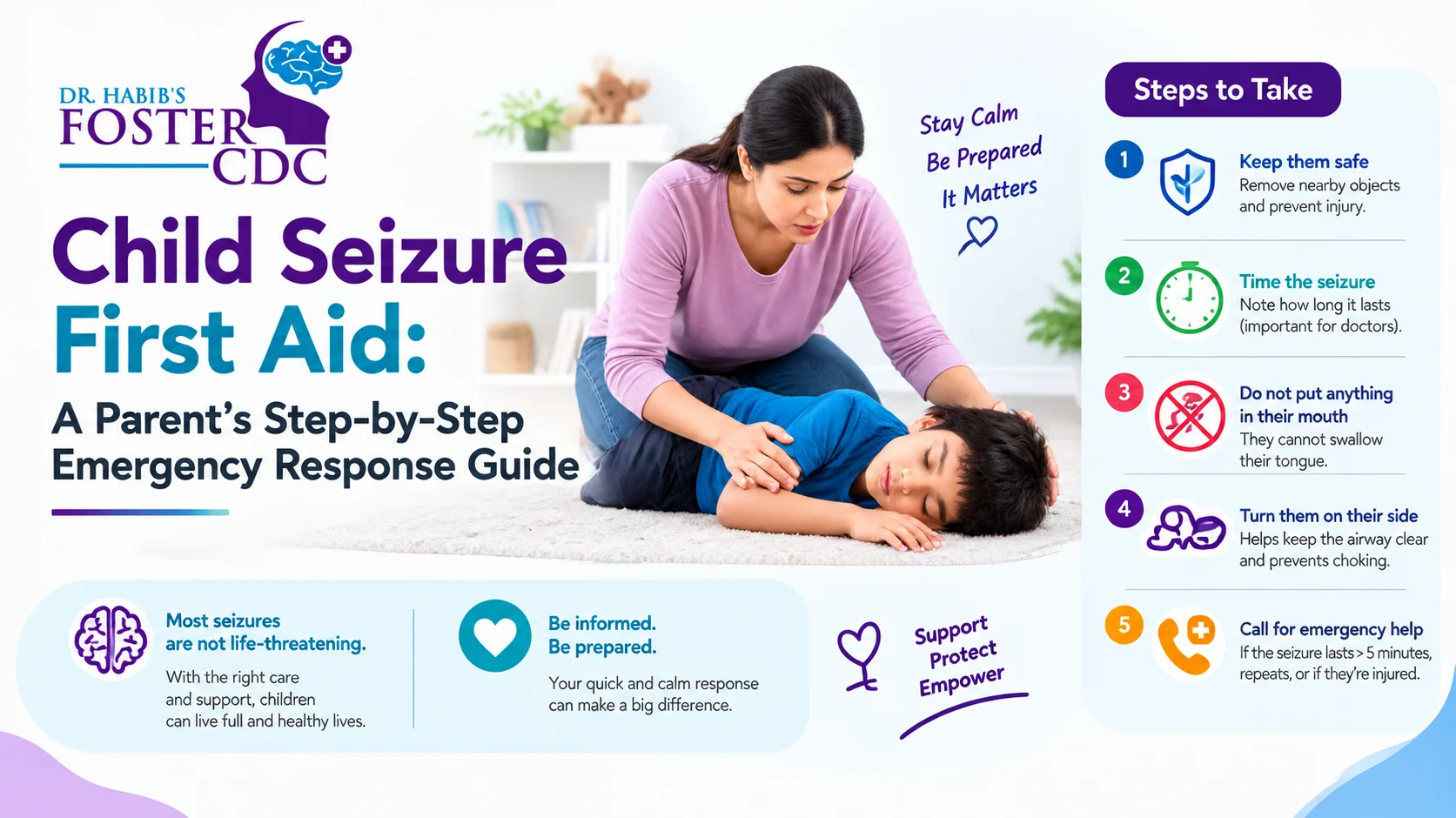
Watching your child have a seizure is frightening, even when you know, logically, that most seizures stop on their own within a couple of minutes. In that moment, having a clear, memorized set of steps matters far more than any amount of general knowledge. This guide gives you exactly that: a step-by-step first aid protocol, clear do’s and don’ts, and the specific signs that mean it’s time to call for emergency help.
Immediate 5-Step Safety Protocol
- Stay calm and start timing. Note the exact time the seizure starts. This single detail — more than almost anything else — determines whether the situation needs emergency care.
- Keep your child safe from injury. Clear away anything hard, sharp, or dangerous nearby. If they’re on a bed or elevated surface, guide them gently to the floor if possible. Cushion their head with something soft — a folded piece of clothing works if nothing else is available.
- Do not restrain them and do not put anything in their mouth. This is one of the most important — and most commonly misunderstood — rules in seizure first aid. Your child cannot swallow their tongue, and trying to hold their movements still or place something in their mouth is far more likely to cause an injury than prevent one.
- Turn them onto their side as soon as you safely can. This is the recovery position — it keeps the airway clear and reduces the risk of choking, particularly if there’s any vomiting or excess saliva. Position their mouth pointing toward the ground.
- Loosen anything tight around their neck and stay with them. Loosen collars or anything restrictive. Stay close, speak calmly, and don’t leave your child alone until they’re fully awake and alert again.
Critical Do’s and Don’ts During an Episode
| Do | Don’t |
| Time the seizure from start to finish | Don’t panic or shout — your child may still be able to sense your presence |
| Clear the area of hazards | Don’t try to hold your child down or stop their movements |
| Turn them onto their side once safe to do so | Don’t put anything — including your fingers — in their mouth |
| Loosen tight clothing near the neck | Don’t attempt CPR or rescue breaths unless they’ve stopped breathing entirely once the seizure ends |
| Stay with them until fully alert | Don’t offer water, food, or medication until they’re completely awake |
| Comfort and reassure them as they come around | Don’t assume it’s “just a phase” if this is a first seizure — always get it evaluated |
Most seizures last only one to two minutes and resolve on their own. Afterward, your child may be confused, sleepy, or disoriented for anywhere from several minutes to, in some cases, longer — this recovery period (sometimes called the “postictal state”) is normal and doesn’t need to be rushed.
When to Call for Emergency Help
Call emergency services (108 in India) immediately if any of the following apply:
- The seizure lasts longer than 5 minutes
- Your child has difficulty breathing or doesn’t resume normal breathing once the seizure ends
- Another seizure begins before they’ve fully recovered from the first
- This is your child’s first-ever seizure
- The seizure happened in water (such as during a bath)
- Your child was injured during the seizure
- Your child doesn’t return to their usual alert state within a reasonable time afterward
If your child has a known seizure history and has been prescribed a rescue medication by their neurologist, follow the specific emergency plan your doctor has given you — this will usually specify when to administer it, generally if a seizure passes a certain duration before help arrives.
Recognizing Different Types of Seizures in Children
Not every seizure looks like the dramatic, full-body convulsion many parents picture. Recognizing the different presentations helps you respond appropriately and describe what happened accurately to a doctor:
- Generalized tonic-clonic seizures (convulsive/”grand mal”) — the body stiffens, then jerks rhythmically; this is the type the steps above are written for
- Absence seizures — brief episodes of blank staring or unresponsiveness, sometimes with subtle eyelid fluttering, often lasting only a few seconds and easily mistaken for daydreaming
- Focal (partial) seizures — may involve unusual movements in just one part of the body, confused behaviour, fumbling, chewing motions, or wandering, without necessarily involving the whole body
- Febrile seizures — triggered by a rapid rise in body temperature, typically in children between 6 months and 5 years, and usually brief and self-limiting
Whatever the type, the same core principles apply: stay calm, keep your child safe, time it, and know the specific signs that mean it’s time to call for help.
Staying Calm as a Parent (It Matters More Than You Think)
It’s completely natural to feel panic in the moment — but your calm presence genuinely helps your child, both during the seizure and as they come around afterward, often confused and frightened. A few things that help in practice:
- Practice the steps mentally before you ever need them — reading through this guide now, rather than trying to recall it for the first time during an actual seizure, makes a real difference
- Say your child’s name calmly and reassure them as the seizure ends, even if they can’t respond yet — many children can hear you before they can fully communicate
- Have your plan and emergency numbers easily accessible, not buried in a phone you’ll be fumbling with in the moment
- Debrief afterward, either with your child’s doctor or, if needed, your own support system — repeated exposure to a frightening event without processing it can understandably wear on a parent over time
Distinguishing an Isolated Seizure from Epilepsy
A single seizure does not automatically mean your child has epilepsy. Epilepsy is specifically defined as a tendency to have recurrent, unprovoked seizures — a diagnosis that typically requires two or more seizures, or one seizure alongside a significantly elevated risk of recurrence based on clinical evaluation.
A one-time seizure can have several possible causes, including a high fever (febrile seizures, common in young children), a specific triggering illness, or, in some cases, no identifiable cause at all. This is exactly why every first seizure deserves a full medical evaluation — not to alarm you, but to properly understand what happened and whether further seizures are likely.
Red Flags Requiring Emergency Room Care
Beyond the “call emergency services” list above, bring your child in for urgent evaluation (even after the seizure has clearly ended and they seem fine) if you notice:
- A fever alongside the seizure, especially in a child who hasn’t had one before
- Ongoing confusion, unusual behaviour, or weakness on one side of the body afterward
- A head injury that occurred just before or during the seizure
- Vomiting, severe headache, or stiff neck following the episode
- Any seizure in a child under 6 months of age
What to Expect at a Pediatric Neurologist Evaluation
After a seizure, a pediatric neurology evaluation typically includes a detailed history (what the seizure looked like, how long it lasted, what happened before and after), a physical and neurological examination, and often an EEG (electroencephalogram) to look at the brain’s electrical activity. Depending on the findings, further tests like blood work or brain imaging may be recommended. The goal is to determine whether this was an isolated event, identify any underlying cause, and — if there’s a meaningful risk of recurrence — put together an appropriate management and safety plan going forward.
Building Your Own Seizure Action Plan
If your child has been diagnosed with epilepsy or has had a seizure, it’s worth having a simple written plan at home and shared with school or caregivers — covering what a typical seizure looks like for your child, how long is “too long” for them specifically, whether they’ve been prescribed a rescue medication, and who to call. Keeping this information somewhere visible (like on the fridge) means anyone caring for your child in your absence has what they need in the moment, without having to remember it under pressure.
Frequently Asked Questions
Should I put something in my child’s mouth during a seizure to stop them from biting their tongue?
No. This is a persistent myth — placing anything in the mouth during a seizure is far more likely to cause injury (broken teeth, jaw injury, or choking) than to help, and a person having a seizure cannot swallow their tongue.
How long is too long for a child’s seizure?
A seizure lasting longer than 5 minutes is considered a medical emergency and requires immediate emergency care, since prolonged seizures carry increased risk and may need medication to stop them.
My child seemed completely fine within a few minutes after their first seizure — do we still need to see a doctor?
Yes. Every first seizure warrants a medical evaluation, even if your child appears to recover quickly and completely, since it’s important to understand what caused it and whether there’s a risk of it happening again.
Can a high fever alone cause a seizure in a young child?
Yes — febrile seizures, triggered by a rapid rise in temperature, are relatively common in young children and are usually not a sign of epilepsy, though they should still always be evaluated by a doctor.
What should I tell my child’s school or caregivers if they have a seizure disorder?
Share a simple written plan describing what their seizures typically look like, how long is considered too long for them specifically, any prescribed rescue medication and how to administer it, and clear instructions on when to call for emergency help.
Next step: For a full pediatric epilepsy evaluation, EEG assessment, or ongoing seizure management, consult Dr. Habib G. Pathan at Foster CDC, Hyderabad — with clinics at Tolichowki, Malakpet, and Suncity.

Recent Comments