
Introduction
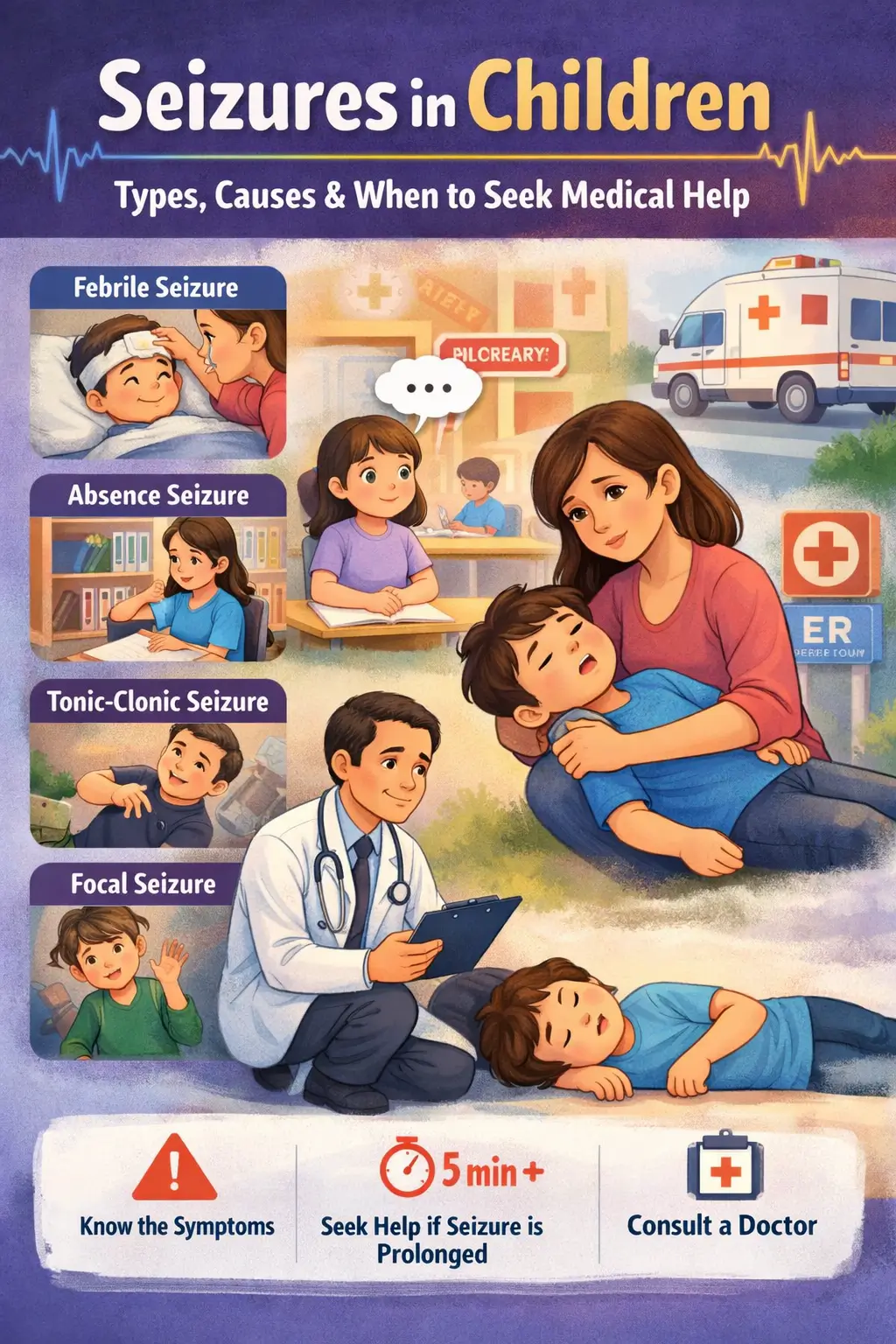
Seizures in children can be frightening for parents, especially when they happen for the first time. Understanding the types of seizures in children, their causes, and knowing when to seek medical help for child seizures is crucial for early diagnosis and treatment.
This guide explains everything in a simple, parent-friendly way, helping you recognize symptoms early and take the right action.
What Are Seizures in Children?
A seizure occurs when there is sudden, abnormal electrical activity in the brain. This can cause changes in behavior, movements, or consciousness.
In children, seizures may look different from adults and can sometimes be mistaken for normal behaviors like staring spells or sudden jerks.
Types of Seizures in Children
1. Febrile Seizures

-
Most common in children aged 6 months to 5 years
-
Triggered by high fever
-
Usually harmless but needs evaluation
2. Absence Seizures (Staring Spells)

-
Child suddenly stops activity and stares blankly
-
Lasts a few seconds
-
Often mistaken for daydreaming
3. Tonic-Clonic Seizures (Grand Mal)

-
Loss of consciousness
-
Body stiffening followed by jerking movements
-
May involve tongue biting or loss of bladder control
4. Focal Seizures

-
Starts in one part of the brain
-
May affect one side of the body
-
Child may remain conscious or confused
5. Myoclonic Seizures

-
Sudden, brief jerks of muscles
-
Often occur in clusters
-
Can be mistaken for normal reflexes
Common Causes of Seizures in Children
Understanding the causes of seizures in children helps in proper treatment:
-
High fever (febrile seizures)
-
Brain infections (meningitis, encephalitis)
-
Head injury
-
Genetic conditions or epilepsy
-
Low blood sugar or electrolyte imbalance
-
Birth-related complications
-
Brain tumors (rare but possible)
Symptoms of Seizures in Children
Recognizing early symptoms of seizures in children can save lives:
-
Sudden jerking movements
-
Staring spells or unresponsiveness
-
Loss of consciousness
-
Stiffness in body
-
Unusual eye movements
-
Confusion after episode
-
Sudden fall without reason
When to Seek Medical Help for Child Seizures
You should seek immediate medical help if:
-
The seizure lasts more than 5 minutes
-
It is the child’s first seizure
-
The child has difficulty breathing
-
Seizures happen repeatedly
-
The child does not regain consciousness
-
There is no fever but seizure occurs
-
Injury happens during the episode
What to Do During a Seizure (First Aid Tips)
-
Stay calm and note the time
-
Place the child on their side
-
Remove nearby dangerous objects
-
Do NOT put anything in the mouth
-
Loosen tight clothing
-
Do NOT restrain movements
Diagnosis of Seizures in Children
Doctors may recommend:
-
EEG (brain activity test)
-
MRI or CT scan
-
Blood tests
-
Developmental assessment
Treatment Options for Seizures in Children
Treatment depends on the cause:
-
Anti-seizure medications
-
Lifestyle management
-
Surgery (in rare cases)
-
Ketogenic diet (for specific epilepsy cases)
Prevention Tips for Seizures in Children
-
Manage fever early
-
Ensure proper nutrition
-
Avoid head injuries
-
Follow medication schedule
-
Regular doctor check-ups
FAQs: Seizures in Children
1. Are seizures in children dangerous?
Not always. Some seizures like febrile seizures are harmless, but repeated or long seizures need medical attention.
2. Can seizures in children be cured?
Many children outgrow seizures or control them with medication.
3. What triggers seizures in children?
Fever, infections, lack of sleep, and neurological conditions are common triggers.
4. How long do seizures last in children?
Most seizures last less than 2 minutes. Longer seizures require urgent care.
5. Can a child live a normal life with seizures?
Yes, with proper treatment and care, most children lead normal lives.
Conclusion
Understanding seizures in children, including their types, causes, and warning signs, is essential for every parent. Early recognition and timely medical care can make a significant difference in your child’s health and development.
If your child experiences any unusual symptoms, do not ignore them—consult a pediatric neurologist immediately.

Recent Comments