
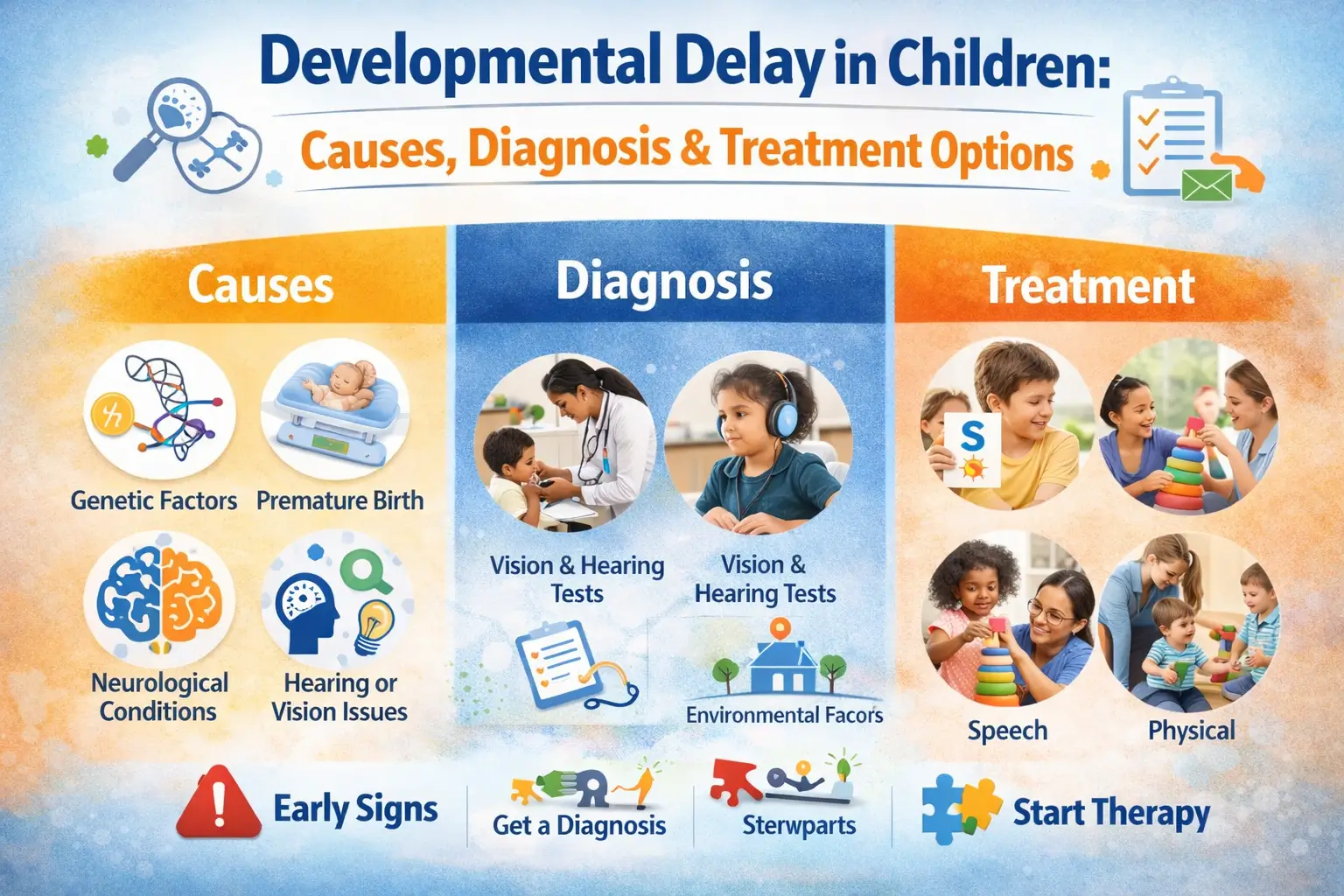
Introduction: Understanding Developmental Delay in Children
Every child grows and learns at their own pace. However, when a child does not reach expected milestones related to speech, movement, learning, or social interaction, it may indicate a developmental delay in children. Early identification is important because timely support can significantly improve a child’s future development.
Many parents feel confused or worried when they first hear this term. Nevertheless, developmental delays are more common than most people think, and with early diagnosis and the right treatment plan, children often make excellent progress. This guide explains the causes, diagnosis process, and available treatment options in a simple and practical way for parents.
What Is Developmental Delay in Children?
A developmental delay occurs when a child takes longer than expected to achieve developmental milestones compared to peers of the same age. These delays can affect one or multiple areas of growth, including:
-
Speech and language skills
-
Motor skills (walking, crawling, coordination)
-
Cognitive or learning abilities
-
Social and emotional development
-
Daily living skills
When these milestones are significantly delayed, professionals may recommend further evaluation and early intervention support.
Types of Developmental Delays
Understanding different categories helps parents recognize where support may be needed.
1. Speech and Language Delay
Children may struggle to speak clearly, understand language, or communicate needs effectively.
2. Motor Skill Delay
This includes difficulty with physical activities such as sitting, walking, or using hands for tasks like drawing or holding objects.
3. Cognitive Development Delay
Children may have challenges with memory, problem-solving, or understanding new concepts.
4. Social and Emotional Delay
Some children find it hard to interact with others, manage emotions, or engage in group activities.
5. Global Developmental Delay
When delays appear in multiple areas of development, it is known as global developmental delay.
Common Causes of Developmental Delay in Children
There is no single cause behind developmental delays. In many cases, multiple factors contribute.
Genetic Factors
Certain genetic conditions can influence brain and body development.
Premature Birth
Babies born early may need additional time and support to reach developmental milestones.
Neurological Conditions
Brain injuries, infections, or neurological disorders may impact growth and learning.
Hearing or Vision Problems
When children cannot hear or see properly, language and social development may slow down.
Environmental Factors
Limited stimulation, poor nutrition, or lack of early learning exposure can also affect development.
Sometimes, the exact cause remains unknown, which is completely normal. The focus should always be on support and progress rather than blame.
Early Signs Parents Should Watch For
Recognizing early symptoms helps families seek timely help.
-
Limited eye contact or social interaction
-
Delayed speech or unclear words
-
Difficulty sitting, crawling, or walking
-
Trouble following simple instructions
-
Lack of interest in play or interaction
-
Difficulty learning new skills
If these signs persist over time, a professional developmental assessment is recommended.
How Developmental Delay Is Diagnosed
Diagnosis usually involves a combination of observations, screening tools, and specialist evaluations.
Developmental Screening
Pediatricians check whether children are reaching age-appropriate milestones.
Detailed Developmental Assessment
Specialists such as child psychologists, developmental pediatricians, or therapists conduct in-depth evaluations.
Hearing and Vision Tests
These tests rule out sensory issues that may affect development.
Medical and Family History
Doctors review pregnancy history, birth details, and family background to identify risk factors.
Early diagnosis helps create a personalized treatment plan tailored to the child’s needs.
Treatment Options for Developmental Delay in Children
The good news is that early therapy and structured support often lead to strong improvement.
1. Speech and Language Therapy
Helps children improve communication, vocabulary, and understanding.
2. Occupational Therapy
Supports fine motor skills, daily activities, and sensory integration.
3. Physical Therapy
Improves balance, strength, coordination, and overall movement.
4. Behavioral Therapy
Helps children develop social skills and manage emotional challenges.
5. Early Intervention Programs
These programs combine multiple therapies and involve parents actively in the learning process.
Consistency and parental participation play a major role in successful outcomes.
How Parents Can Support Children at Home
Professional treatment works best when supported by everyday activities at home.
-
Read stories and talk regularly
-
Encourage play-based learning
-
Create structured routines
-
Celebrate small achievements
-
Reduce screen time and encourage interaction
Small daily efforts can significantly enhance progress over time.
Long-Term Outlook for Children with Developmental Delays
Many parents worry about the future, but early support can change outcomes dramatically. Children who receive timely therapy often:
-
Improve communication and social skills
-
Perform better in school
-
Gain independence gradually
-
Build confidence and emotional resilience
Every child’s journey is unique, and progress may happen at different speeds. Patience and consistent support are key.
Frequently Asked Questions (FAQs)
1. What age should I worry about developmental delay?
If your child misses multiple milestones or shows delays compared to peers, consult a pediatrician for guidance.
2. Can developmental delays be cured?
Many children improve significantly with therapy and early intervention, although outcomes vary depending on the cause.
3. Is developmental delay the same as autism?
No. Developmental delay is a broad term and does not automatically mean autism, although some children may share similar symptoms.
4. How early should treatment begin?
The earlier the better. Early childhood intervention produces the best developmental outcomes.
5. Can children catch up completely?
Some children catch up fully, while others continue receiving support. Early diagnosis improves overall progress.
Conclusion
Understanding developmental delay in children empowers parents to take positive and proactive steps. Early recognition, accurate diagnosis, and consistent therapy can help children develop essential life skills and reach their full potential.
Instead of waiting and worrying, seeking guidance early gives children the strongest chance for growth, confidence, and long-term success.

Recent Comments