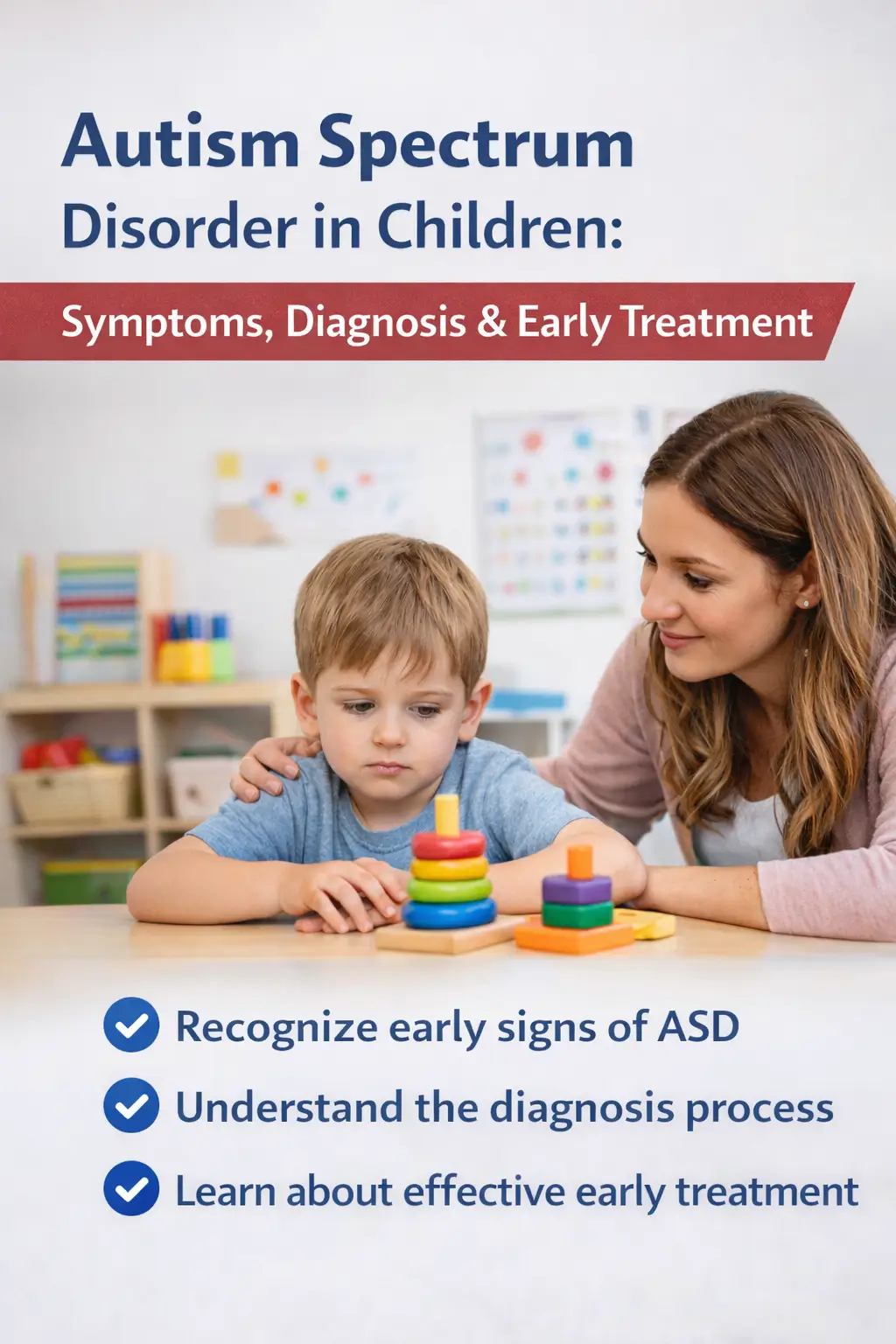
Autism Spectrum Disorder in children is a neurodevelopmental condition that affects communication, social interaction, and behavior. Many parents notice early developmental differences but feel unsure about what they mean. Therefore, understanding the early signs, diagnostic process, and treatment options can help families take timely action.
In this detailed guide, we will explain the symptoms of Autism Spectrum Disorder in children, how doctors diagnose it, and why early intervention therapy plays a crucial role in improving long-term outcomes.
What Is Autism Spectrum Disorder in Children?
Autism Spectrum Disorder (ASD) is a brain-based developmental condition that impacts how a child communicates, learns, and interacts with others. The term “spectrum” means that symptoms and severity vary widely. Some children may have mild social challenges, while others may need significant support in daily life.
ASD usually appears before the age of three. However, early developmental screening can help identify red flags even before the second birthday.
Early Signs and Symptoms of Autism Spectrum Disorder in Children
Recognizing the early symptoms of Autism Spectrum Disorder in children can make a major difference in treatment success. While every child develops at a different pace, certain behavioral patterns may signal concern.
1. Social Communication Difficulties
-
Limited eye contact
-
Not responding to their name
-
Difficulty understanding emotions
-
Preferring to play alone
-
Delayed speech development
2. Repetitive Behaviors
-
Hand flapping or rocking
-
Repeating words or phrases (echolalia)
-
Strict routines and resistance to change
-
Lining up toys repeatedly
3. Sensory Sensitivities
-
Overreaction to loud sounds
-
Avoiding certain textures
-
Extreme response to lights or smells
4. Delayed Developmental Milestones
-
Late babbling
-
No pointing or waving by 12 months
-
Delayed walking or coordination issues
If your child shows multiple signs of Autism Spectrum Disorder in children, consult a pediatrician or developmental specialist for evaluation.
Causes and Risk Factors of Autism Spectrum Disorder
Although the exact cause of Autism Spectrum Disorder in children is still being researched, experts believe it involves a combination of genetic and environmental factors.
Common Risk Factors:
-
Family history of autism
-
Premature birth
-
Low birth weight
-
Advanced parental age
-
Certain genetic conditions
Importantly, vaccines do not cause autism. Extensive research has disproven that myth.
How Is Autism Spectrum Disorder in Children Diagnosed?
Early diagnosis of Autism Spectrum Disorder in children improves treatment outcomes significantly. Doctors follow a structured evaluation process.
Step 1: Developmental Screening
Pediatricians conduct screening at 18 and 24 months during routine visits. They assess communication, behavior, and social interaction.
Step 2: Comprehensive Diagnostic Evaluation
If concerns arise, specialists such as developmental pediatricians, child neurologists, or psychologists conduct detailed assessments. These may include:
-
Behavioral observation
-
Parent interviews
-
Standardized autism assessment tools
-
Speech and language evaluation
There is no single medical test for ASD. Instead, professionals rely on behavioral criteria outlined in diagnostic manuals.
Why Early Treatment Matters
Early treatment for Autism Spectrum Disorder in children can significantly improve communication skills, social abilities, and independence. The brain develops rapidly during early childhood. Therefore, early intervention therapy leverages this neuroplasticity.
Evidence-Based Early Treatment Options
1. Applied Behavior Analysis (ABA Therapy)
ABA therapy helps children develop positive behaviors and reduce challenging behaviors through structured techniques.
2. Speech and Language Therapy
This therapy improves communication skills, both verbal and non-verbal.
3. Occupational Therapy
Occupational therapy enhances daily living skills, motor coordination, and sensory integration.
4. Social Skills Training
Group sessions help children learn interaction skills in real-life settings.
5. Parent Training Programs
Parents learn strategies to support their child at home, creating consistency in learning.
Early intervention programs often begin before age three. However, treatment benefits children of all ages.
Long-Term Outlook for Children with Autism
The prognosis of Autism Spectrum Disorder in children depends on early diagnosis, therapy consistency, and individual strengths. Many children with early support:
-
Improve communication skills
-
Develop academic abilities
-
Build social relationships
-
Gain independence
Some individuals may need lifelong support, while others live independently as adults.
When Should Parents Seek Help?
You should consult a specialist if:
-
Your child loses previously learned skills
-
There is no speech by 18 months
-
Social interaction seems significantly limited
-
Repetitive behaviors interfere with daily life
Early evaluation does not harm your child. Instead, it opens doors to support services.
Frequently Asked Questions (FAQs)
1. What are the first signs of Autism Spectrum Disorder in children?
Early signs include lack of eye contact, delayed speech, limited social interaction, and repetitive behaviors.
2. At what age can Autism Spectrum Disorder be diagnosed?
Doctors can reliably diagnose autism by age two, although signs may appear earlier.
3. Can Autism Spectrum Disorder in children be cured?
There is no cure for autism. However, early treatment significantly improves skills and quality of life.
4. Is Autism Spectrum Disorder genetic?
Research shows a strong genetic component, though environmental factors may also contribute.
5. How effective is early intervention therapy?
Early intervention therapy improves communication, social skills, and adaptive behavior in many children.
Final Thoughts
Autism Spectrum Disorder in children requires awareness, compassion, and early action. While the journey may feel overwhelming at first, timely diagnosis and evidence-based therapies can transform developmental outcomes. If you suspect signs of autism, do not wait. Early screening and professional support provide the best foundation for your child’s future growth.

Recent Comments