Recognizing Pediatric Stroke Early
“Strokes only happen to older adults.” It’s one of the most common — and most dangerous — assumptions a parent or teacher can make. Because it isn’t true, and believing it can cost precious minutes when a child’s brain needs help the most.
Pediatric stroke is rare, but it is real, and it happens at every age from before birth through the teenage years. The single biggest factor in a child’s outcome isn’t the severity of the stroke itself — it’s how quickly the people around them recognize it and get them to emergency care.
This article is written to be read before an emergency, not during one, so that if you ever do see these signs, you already know exactly what to do.
Dispelling the Myth: Yes, Children Experience Strokes
Stroke occurs when blood flow to part of the brain is interrupted — either blocked (ischemic stroke) or caused by bleeding (hemorrhagic stroke) — depriving brain tissue of oxygen. While the risk factors in children differ from those in adults (cholesterol and lifestyle-related disease are rarely the cause), the underlying danger to brain tissue is exactly the same.
Pediatric stroke affects:
- Newborns, often around the time of birth (perinatal stroke)
- Infants and toddlers, sometimes linked to congenital heart conditions or infections
- School-age children and teens, sometimes associated with blood clotting disorders, sickle cell disease, or head and neck injuries
Because stroke is so strongly associated with aging in the public mind, pediatric strokes are frequently misdiagnosed at first as migraine, seizure, or even a behavioral issue — which delays treatment at exactly the moment speed matters most. Recognizing that children can have strokes at all is the first and most important step toward catching one early.
The Pediatric BE-FAST Protocol Explained
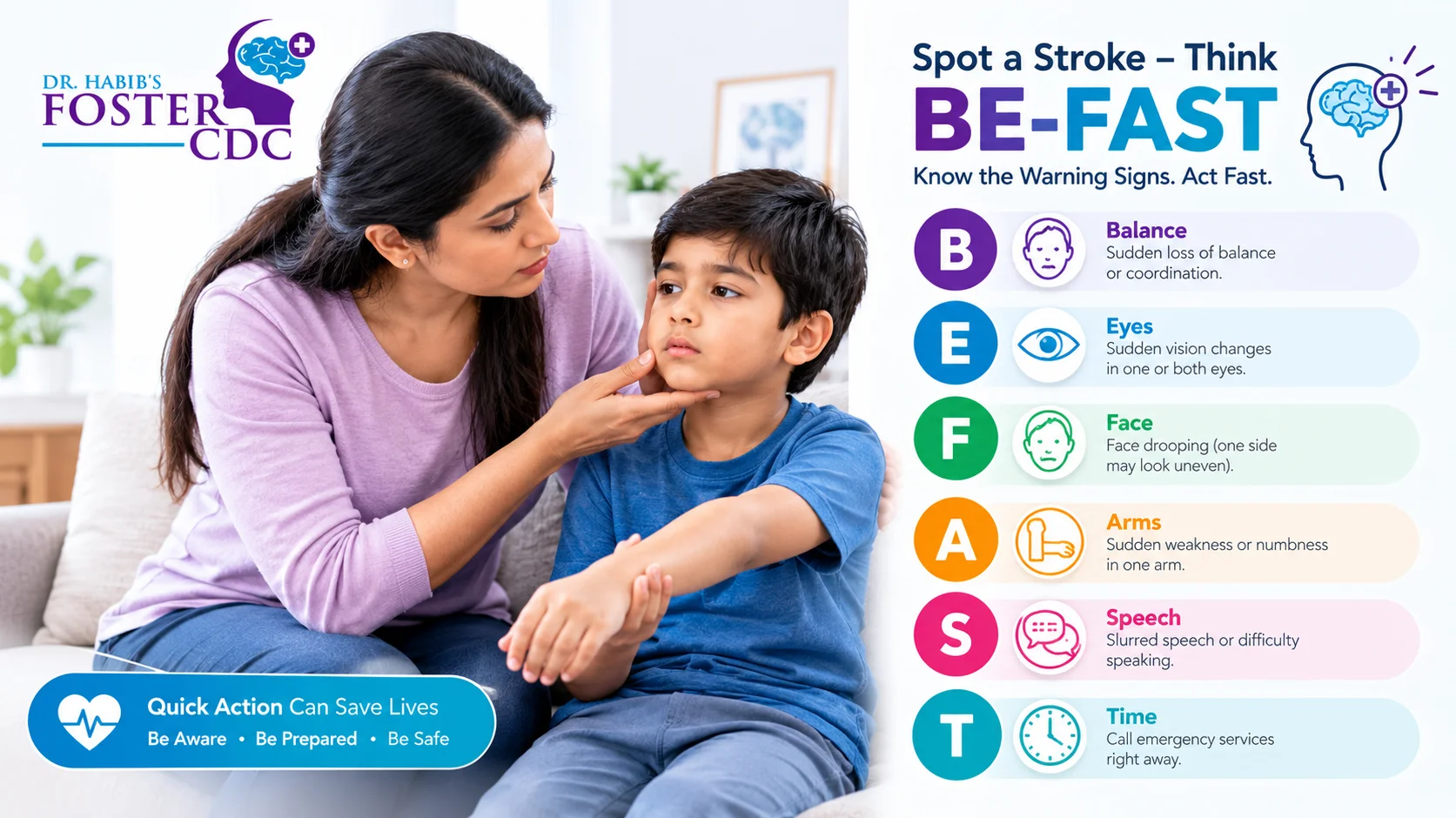
BE-FAST is an easy-to-remember checklist, adapted for pediatric recognition, that captures the most common stroke warning signs:
- B — Balance: Sudden loss of balance or coordination, unsteady walking, or a child who suddenly can’t sit or stand the way they normally would
- E — Eyes: Sudden vision changes, double vision, or one eye that appears to droop or not track normally
- F — Face: Noticeable drooping on one side of the face, an uneven smile, or asymmetry that wasn’t there before
- A — Arms: Sudden weakness or numbness in one arm or leg, or one side of the body not moving normally
- S — Speech: Slurred speech, difficulty forming words, or trouble understanding what others are saying
- T — Time: Time to call emergency services immediately — every minute untreated increases the risk of lasting brain injury
If you notice even one of these signs appearing suddenly, treat it as a medical emergency. This is not a “wait and see” situation — it calls for immediate hospitalization, in the same way other acute neurological emergencies require urgent, specialist-level evaluation.
Subtle Symptoms in Infants vs. Older Children
One of the hardest parts of recognizing pediatric stroke is that the signs look different depending on a child’s age and ability to communicate.
In infants and very young children, watch for:
- Seizures, especially focal seizures affecting one side of the body
- Extreme sleepiness or difficulty waking
- Feeding difficulties that appear suddenly
- Noticeably favoring one hand or side of the body (an early hand preference before 12 months can be a subtle red flag)
- A high-pitched or unusual cry combined with any of the above
In older children and teens, watch for:
- Sudden, severe headache unlike any they’ve had before
- Confusion or difficulty concentrating that comes on abruptly
- Sudden weakness or numbness, especially on one side of the body
- Trouble speaking, finding words, or slurred speech
- Vision changes or sudden clumsiness
Because infants can’t tell you something feels wrong, any sudden, unexplained change in movement, alertness, or feeding deserves prompt medical attention — don’t wait for a textbook presentation.
Underlying Medical Risk Factors in Young Patients
While pediatric stroke can occur without any known risk factor, certain conditions increase the likelihood and are worth being aware of, especially if your child has been diagnosed with one of them:
- Congenital heart disease — structural heart conditions can increase clot risk
- Sickle cell disease — one of the most significant risk factors for childhood stroke
- Blood clotting disorders, inherited or acquired
- Head or neck trauma, including injuries that affect blood vessels in the neck
- Infections, particularly those affecting the brain or its surrounding tissues
- Certain genetic and metabolic conditions
If your child has any of these risk factors, it’s worth discussing a personalized monitoring plan with a pediatric neurologist, so you know exactly what warning signs to watch for in your child’s specific situation.
Golden Hour Interventions and Neuroprotection
In stroke care, timing isn’t just important — it’s everything. The phrase “time is brain” exists because every minute of interrupted blood flow results in the loss of brain cells. The window for the most effective emergency treatments, such as clot-dissolving medication or clot-removal procedures, is measured in hours, not days.
If you suspect a stroke in your child:
- Call emergency services immediately — do not drive to the hospital yourself if you can avoid it, as emergency responders can begin assessment en route
- Note the time symptoms started — this single detail can determine which treatments are available
- Do not give food, water, or medication while waiting for help
- Stay calm and keep your child still and comfortable, monitoring breathing and alertness
Once a child is medically stabilized, the recovery journey often continues well beyond the hospital stay. Pediatric neuro-rehabilitation — including physical, occupational, and speech therapy — plays a major role in helping children regain function and continue meeting developmental milestones after a stroke.
Frequently Asked Questions
Q: Can infants and young children have strokes? A: Yes, pediatric stroke affects newborns and children. Key signs follow the BE-FAST rule: Balance loss, Eye changes, Face drooping, Arm weakness, and Slurred speech. Immediate emergency hospitalization is vital.
Q: What is the most common early sign of stroke in a baby? A: Sudden seizures affecting one side of the body, extreme sleepiness, or a noticeable early preference for one hand are among the more common subtle signs in infants.
Q: How is pediatric stroke different from adult stroke? A: The underlying risk factors differ — conditions like congenital heart disease, sickle cell disease, and clotting disorders are more relevant in children — but the urgency of recognition and treatment is identical to adult stroke care.
Q: What should a teacher do if they notice BE-FAST signs in a student? A: Treat it as a medical emergency: call emergency services immediately, note the exact time symptoms began, and keep the child calm and still until help arrives.
Q: Is recovery possible after a pediatric stroke? A: Many children show significant recovery, particularly with prompt treatment followed by structured neuro-rehabilitation, including physical, occupational, and speech therapy.
Recognize It. Act Fast. Recover Strong.
Pediatric stroke is uncommon, but being able to recognize it in seconds — not hours — can be the difference between a full recovery and lasting disability. Share the BE-FAST signs with grandparents, teachers, and caregivers, so every adult around your child knows exactly what to watch for and exactly what to do.
For specialized post-acute pediatric neuro-rehabilitation, connect with Dr. Habib’s Foster CDC team in Hyderabad to support your child’s recovery and continued development after a stroke.

Recent Comments