If your child is constantly restless, easily distracted, or struggling to focus on even simple tasks, you might be wondering:
👉 “Is this normal childhood behavior or something more serious?”
Many parents face this confusion. And often, the answer lies in understanding ADHD in children symptoms, diagnosis and treatment options early.
The good news? With the right approach, children with ADHD can thrive—not just academically, but socially and emotionally too.
Let’s break everything down in a simple, practical way.
What is ADHD in Children? (Simple Explanation)
ADHD (Attention-Deficit/Hyperactivity Disorder) is a neurodevelopmental condition that affects how a child:
- Focuses
- Controls impulses
- Manages energy levels
In simple terms:
👉 ADHD makes it harder for children to sit still, stay focused, and think before acting.
But remember—this is not about intelligence. Many children with ADHD are highly creative and intelligent.
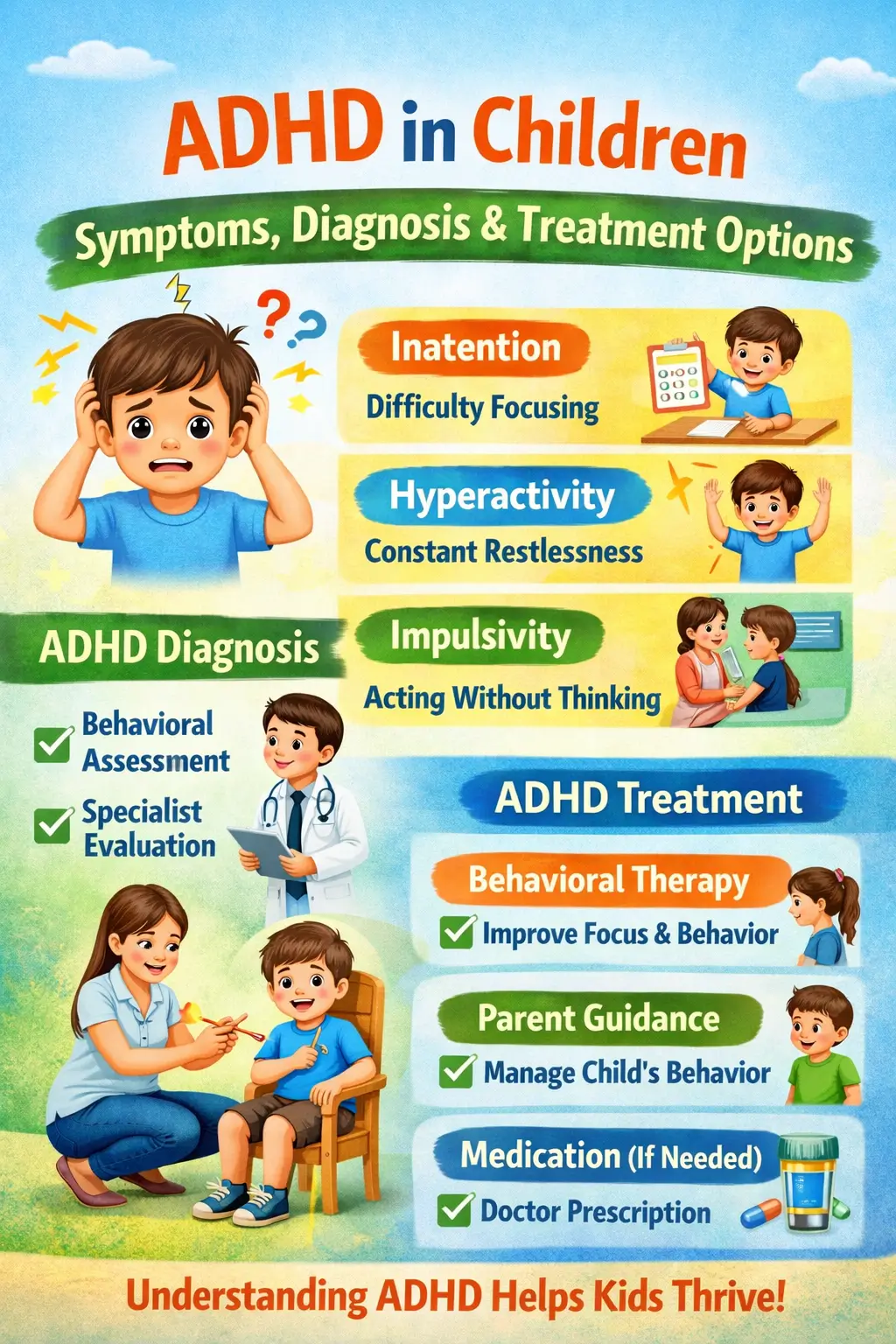
Common Symptoms of ADHD in Children
Understanding symptoms early is the first step toward the right treatment.
1. Inattention Symptoms
- Difficulty focusing on tasks
- Easily distracted by surroundings
- Forgetting homework or daily tasks
- Trouble following instructions
2. Hyperactivity Symptoms
- Constant movement (running, jumping)
- Difficulty sitting in one place
- Talking excessively
- Fidgeting frequently
3. Impulsivity Symptoms
- Interrupting others
- Acting without thinking
- Difficulty waiting for their turn
- Emotional outbursts
👉 If these symptoms are consistent for 6 months or more, it may indicate ADHD.
Early Signs of ADHD in Kids (Age-Wise Insight)
Toddlers (2–4 Years)
- Extremely active compared to peers
- Difficulty following simple instructions
School-Age Children (5–12 Years)
- Poor academic performance despite intelligence
- Difficulty completing tasks
- Behavioral issues in class
Teenagers
- Poor time management
- Emotional instability
- Risk-taking behavior
How ADHD is Diagnosed in Children
There is no single test for ADHD.
Diagnosis usually involves:
1. Behavioral Assessment
Doctors observe patterns of behavior at home and school.
2. Parent & Teacher Feedback
Reports from parents and teachers play a key role.
3. Developmental History
Understanding the child’s growth and milestones.
👉 A pediatric neurologist or child psychologist typically confirms the diagnosis.
Treatment Options for ADHD in Children
The best approach is multi-dimensional—not just one solution.
1. Behavioral Therapy (First Line Treatment)
This is often the most recommended option.
- Helps improve focus
- Teaches self-control
- Builds positive habits
👉 Especially effective for younger children
2. Occupational Therapy for ADHD
Helps children with:
- Attention improvement
- Sensory processing
- Daily routine management
👉 Works well when combined with behavioral therapy
3. Parent Training & Guidance
Parents learn:
- How to manage behavior
- How to set routines
- How to reduce triggers
4. School Support & Intervention
- Special learning techniques
- Structured classroom environment
- Teacher support strategies
5. Medication (If Required)
In some cases, doctors may prescribe medication.
👉 But it is usually recommended only when:
- Symptoms are severe
- Therapy alone is not enough
Can ADHD Be Cured?
ADHD is not something that is “cured” completely—but it can be effectively managed.
With the right support:
- Children improve focus
- Behavior becomes manageable
- Academic performance improves
👉 Many successful adults today have ADHD—they just learned how to manage it.
Best Home Strategies for Managing ADHD
Parents play a huge role in improvement.
Try these:
- Create a fixed daily routine
- Break tasks into small steps
- Use reward-based motivation
- Limit screen time
- Encourage physical activity
👉 Small changes at home can create big improvements.
When Should You Consult a Specialist?
You should consider professional help if:
- Symptoms are affecting school performance
- Child struggles with daily activities
- Behavioral issues are increasing
- Teacher complaints are frequent
👉 Early intervention leads to better outcomes.
Long-Term Impact of ADHD (If Ignored)
If left untreated, ADHD can lead to:
- Low self-confidence
- Academic struggles
- Social difficulties
- Emotional issues
But with early diagnosis and therapy:
👉 These risks can be significantly reduced.
FAQs – ADHD in Children
Q1. What is the main cause of ADHD in children?
ADHD is mainly linked to brain development and genetics, not parenting style.
Q2. At what age can ADHD be diagnosed?
ADHD can be diagnosed as early as 4–5 years, but symptoms may appear earlier.
Q3. Is ADHD more common in boys or girls?
ADHD is more commonly diagnosed in boys, but girls often go undiagnosed.
Q4. Can ADHD improve with age?
Yes, symptoms can improve with proper therapy and support.
Q5. Which therapy is best for ADHD in children?
Behavioral therapy combined with occupational therapy is considered highly effective.
Final Thoughts
If your child shows signs of restlessness, distraction, or impulsive behavior, don’t ignore it.
Understanding ADHD in children symptoms, diagnosis and treatment options early can make a huge difference.
👉 With the right guidance, therapy, and support—your child can lead a confident, successful life.

Recent Comments