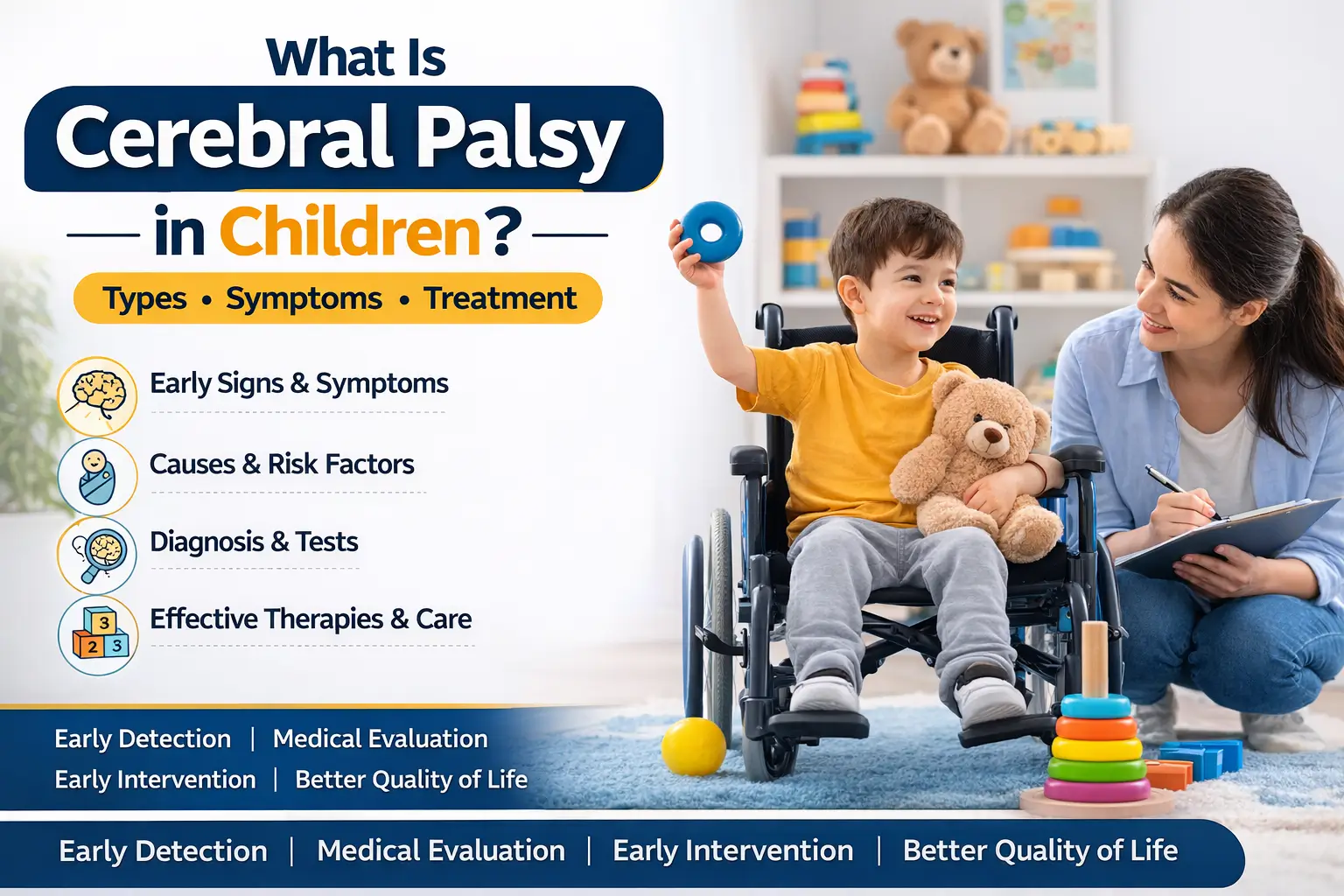
Cerebral palsy is one of the most common neurological conditions affecting children. It impacts muscle movement, posture, and coordination. Many parents first notice signs when their child shows delays in physical milestones such as sitting, crawling, or walking.
Understanding cerebral palsy in children, including its types, symptoms, causes, and management options, can help families seek early medical support and improve a child’s quality of life.
What Is Cerebral Palsy?
Cerebral palsy is a neurological disorder caused by damage to the developing brain. This damage affects the brain’s ability to control body movements and muscle coordination.
Children with cerebral palsy may experience:
-
Muscle stiffness or weakness
-
Difficulty walking
-
Poor balance and coordination
-
Delayed motor development
The condition varies from mild to severe depending on the extent of brain damage.
How Common Is Cerebral Palsy in Children?
Cerebral palsy is the most common motor disability in childhood. Globally, around 1–4 children per 1,000 births are diagnosed with this condition.
With early therapy and proper care, many children with cerebral palsy can improve their functional abilities and independence.
Types of Cerebral Palsy
Cerebral palsy is categorized based on the type of movement disorder.
Spastic Cerebral Palsy
This is the most common type of cerebral palsy.
Symptoms include:
-
Stiff muscles
-
Limited movement
-
Difficulty walking
-
Tight joints
Subtypes include:
-
Spastic diplegia
-
Spastic hemiplegia
-
Spastic quadriplegia
Dyskinetic Cerebral Palsy
Children with dyskinetic cerebral palsy experience involuntary and uncontrolled movements.
Common signs include:
-
Twisting movements
-
Difficulty controlling muscles
-
Problems with speech and swallowing
Ataxic Cerebral Palsy
This type affects balance and coordination.
Children may experience:
-
Unsteady walking
-
Tremors
-
Difficulty with precise hand movements
Mixed Cerebral Palsy
Some children show symptoms of multiple types of cerebral palsy, known as mixed cerebral palsy.
Causes of Cerebral Palsy
Cerebral palsy occurs due to abnormal brain development or brain injury.
Brain Damage During Pregnancy
Problems during pregnancy can affect the baby’s brain development.
Premature Birth
Babies born early have a higher risk of brain injury.
Oxygen Deprivation During Birth
Lack of oxygen during delivery can damage brain cells.
Brain Infections
Serious infections such as meningitis may affect the brain.
Head Injury in Early Childhood
Traumatic brain injuries can lead to cerebral palsy.
Symptoms of Cerebral Palsy in Children
Symptoms vary depending on the type and severity of the condition.
Early Signs in Infants
Parents may notice:
-
Poor head control
-
Stiff or floppy muscles
-
Delayed rolling or sitting
Signs in Toddlers
Common signs include:
-
Delayed walking
-
Difficulty grasping objects
-
Abnormal posture
Symptoms in Older Children
Older children may experience:
-
Poor coordination
-
Speech difficulties
-
Muscle spasms
-
Learning challenges
How Cerebral Palsy Is Diagnosed
Doctors diagnose cerebral palsy through several medical evaluations.
Developmental Screening
Pediatricians monitor growth and developmental milestones.
Neurological Examination
Doctors assess muscle tone, posture, and reflexes.
Brain Imaging Tests
MRI or CT scans help identify brain abnormalities.
Hearing and Vision Tests
These tests detect associated sensory problems.
Management and Treatment of Cerebral Palsy
While cerebral palsy cannot be cured, several treatments help improve mobility and quality of life.
Physical Therapy
Improves muscle strength, flexibility, and mobility.
Occupational Therapy
Helps children develop daily living skills.
Speech Therapy
Supports communication and swallowing abilities.
Medications
Used to control muscle stiffness and spasms.
Assistive Devices
Includes braces, walkers, and wheelchairs.
Surgical Treatment
In severe cases, surgery may improve muscle alignment and movement.
Importance of Early Intervention
Early intervention therapies can significantly improve outcomes for children with cerebral palsy.
Benefits include:
-
Improved motor development
-
Better communication skills
-
Greater independence
-
Enhanced learning ability
Tips for Parents Supporting a Child With Cerebral Palsy
Parents can help their child by:
-
Encouraging physical activity
-
Following therapy programs consistently
-
Providing emotional support
-
Working closely with medical professionals
Frequently Asked Questions (FAQs)
What causes cerebral palsy in children?
Cerebral palsy is caused by damage to the developing brain, usually during pregnancy, birth, or early infancy.
Can cerebral palsy be cured?
Cerebral palsy cannot be cured, but early treatment and therapy can improve a child’s abilities and independence.
At what age is cerebral palsy diagnosed?
Most children are diagnosed between 1 and 2 years of age, when developmental delays become noticeable.
Can children with cerebral palsy walk?
Some children with mild cerebral palsy can walk independently, while others may need assistive devices.
Is cerebral palsy a lifelong condition?
Yes, cerebral palsy is a lifelong condition, but proper management helps children live active lives.
Conclusion
Cerebral palsy is a neurological condition that affects movement and coordination in children. Although the condition cannot be cured, early diagnosis and therapy can significantly improve a child’s development.
Parents should watch for early signs of delayed motor development and consult healthcare professionals for proper evaluation and treatment.

Recent Comments